

Is Black Mold Dangerous? What You Should Know
Protect your property. Call 714-475-0925 today!
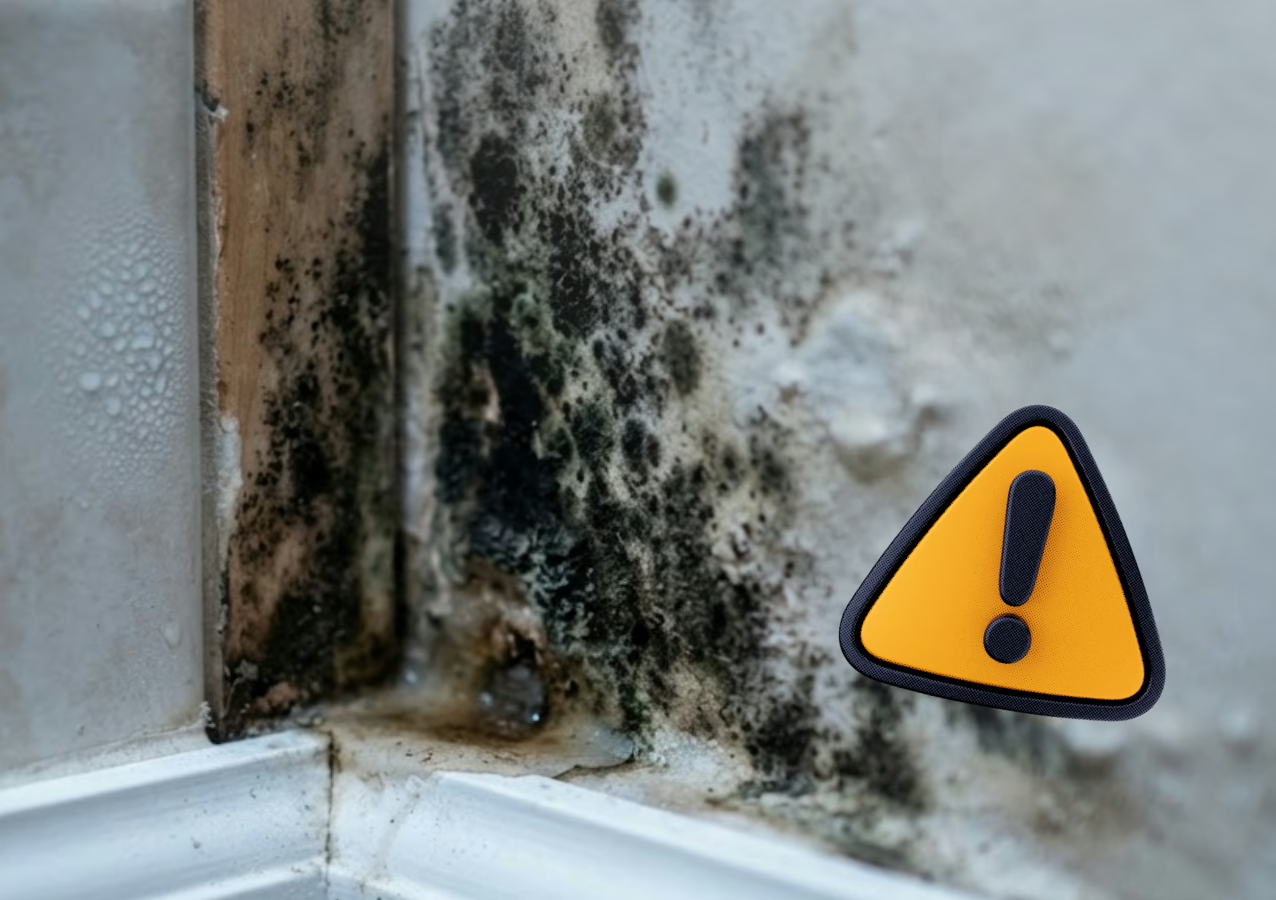
Discovering black mold inside your home can be alarming. Whether you’ve noticed dark discoloration on a wall, ceiling, or around a window, it’s natural to wonder if your family’s health is at risk.
The short answer is yes—black mold can present health concerns for some individuals, particularly those with allergies, asthma, or weakened immune systems. However, many of the frightening claims surrounding “black mold” have been exaggerated over the years.
The color of mold alone does not determine how dangerous it is.
What matters most is why the mold is growing in the first place. Mold develops when excess moisture remains on building materials for an extended period. Whether the mold appears black, green, white, or another color, the underlying problem is almost always water intrusion or elevated humidity.
The good news is that mold problems can be addressed safely when the source of moisture is corrected and professional remediation is performed when necessary.
At THE HAZMAT TEAM, we provide professional mold remediation and mold removal services throughout Orange County and surrounding Southern California communities.
Our focus is on safely removing mold contamination from affected building materials while helping property owners understand the conditions that allowed mold to develop.
When moisture-source identification or structural drying is needed, we recommend working with qualified drying professionals and, when appropriate, independent environmental consultants.
Key Takeaways
- Black mold can affect indoor air quality and may trigger health symptoms in sensitive individuals.
- Mold growth is caused by moisture—not by the color of the mold itself.
- The most important step is identifying and correcting the water source that allowed mold to grow.
- Mold commonly develops after plumbing leaks, roof leaks, flooding, condensation, or prolonged humidity.
- Professional mold remediation removes existing contamination, while moisture control helps prevent it from returning.
THE HAZMAT TEAM specializes in mold remediation and mold removal.
Moisture-source identification and structural drying should be completed by qualified drying professionals when necessary.
What Is Black Mold?
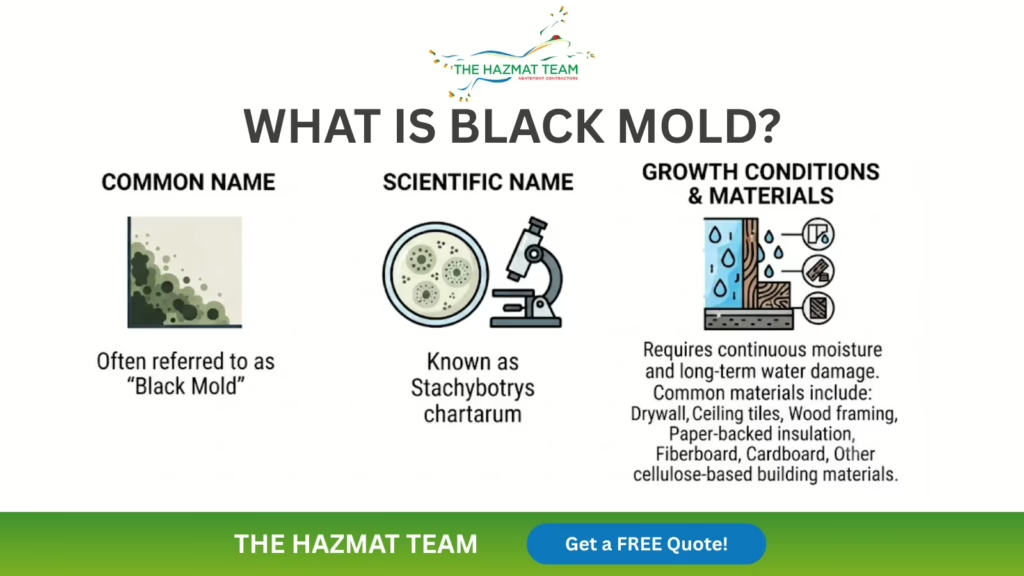
When people refer to “black mold,” they are often talking about a mold species known as Stachybotrys chartarum.
This mold typically appears dark green to black and grows on building materials that have remained wet for an extended period.
Unlike some other common household molds, Stachybotrys chartarum generally requires continuous moisture to thrive. It is most often associated with long-term water damage rather than brief increases in humidity.
Common materials that may support its growth include:
- Drywall
- Ceiling tiles
- Wood framing
- Paper-backed insulation
- Fiberboard
- Cardboard
- Other cellulose-based building materials
Protect your property. Call 714-475-0925 today!
Although Stachybotrys chartarum receives significant media attention, it is important to understand that many different mold species can grow indoors, and they all indicate the presence of excess moisture that should be addressed.
From a remediation standpoint, the priority is not simply identifying the mold species—it is correcting the moisture problem and safely removing the contaminated materials when necessary.
Is Black Mold More Dangerous Than Other Types of Mold?
This is one of the most common questions homeowners ask.
The answer is not necessarily.
Many people assume black mold is dramatically more dangerous than every other type of mold, but current guidance from public health agencies does not support the idea that the color of mold alone determines the level of health risk.
Several types of mold commonly found indoors may affect indoor air quality or trigger allergic reactions.
Some of the more common indoor molds include:
Cladosporium
Frequently found on window frames, bathrooms, HVAC components, and other damp surfaces.
Aspergillus
Commonly found on water-damaged building materials and household dust.
Penicillium
Often develops following water damage and can spread quickly across porous materials.
Alternaria
Frequently found around showers, sinks, windows, and other damp areas.
Stachybotrys chartarum
Often referred to as black mold, this species typically develops on materials that have remained wet for an extended period.
Rather than focusing on the color of the mold, homeowners should focus on the conditions allowing mold to grow.
Any visible mold growth inside a home indicates that excess moisture is present and should be investigated.
Why Does Mold Grow Inside Homes?
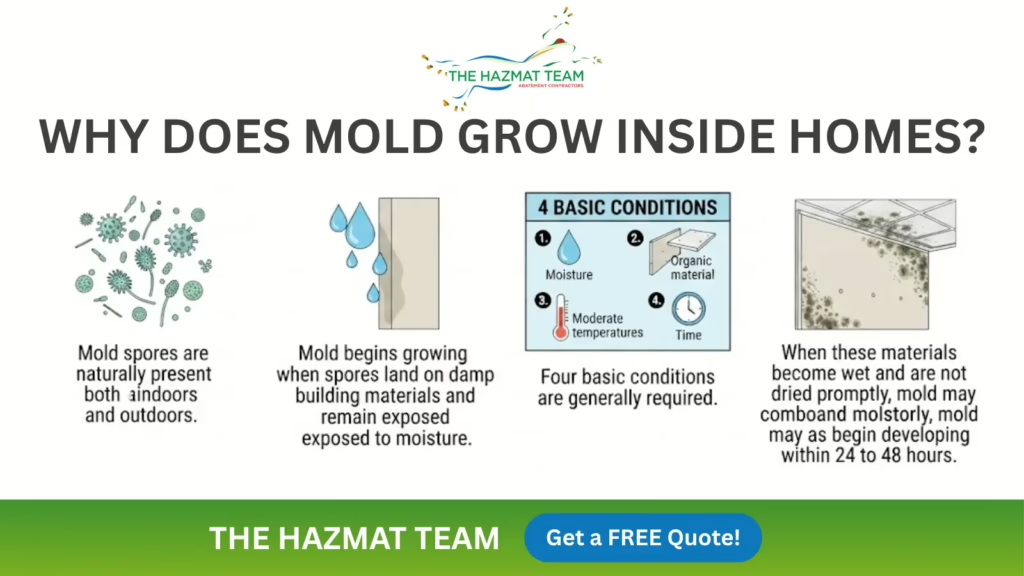
Mold spores are naturally present both indoors and outdoors.
Under normal conditions, these microscopic spores do not create problems.
Mold begins growing when spores land on damp building materials and remain exposed to moisture long enough to establish new growth.
For mold to develop, four basic conditions are generally required:
- Moisture
- Organic material
- Moderate temperatures
- Time
Many common building materials provide an excellent food source for mold.
Examples include:
- Drywall
- Wood framing
- Paper backing
- Ceiling tiles
- Carpet
- Insulation
- Dust and other organic debris
When these materials become wet and are not dried promptly, mold may begin developing within 24 to 48 hours.
This is why responding quickly to water damage is one of the most effective ways to prevent mold growth.
Protect your property. Call 714-475-0925 today!
The Real Problem Isn’t the Mold—It’s the Moisture
One of the biggest misconceptions surrounding black mold is believing that mold itself is the primary issue.
In reality, mold is usually a symptom of an underlying moisture problem.
Without water, mold cannot continue growing.
Whether the moisture comes from a leaking pipe, roof damage, poor ventilation, condensation, or elevated indoor humidity, identifying and correcting the source is essential for long-term success.
Simply cleaning visible mold without correcting the moisture problem often leads to recurring growth.
Successful remediation always addresses both:
- The existing mold contamination.
- The moisture conditions that allowed it to develop.
By treating both issues together, homeowners can significantly reduce the likelihood of future mold problems while protecting both their property and indoor air quality.
What Health Effects Can Black Mold Have?
One of the reasons black mold receives so much attention is because many people associate it with serious health problems.
While mold can affect indoor air quality and cause symptoms in some individuals, the severity of those symptoms depends on several factors, including the person’s overall health, the amount of mold present, the length of exposure, and the condition of the building.
Not everyone reacts to mold in the same way.
Some people may experience no noticeable symptoms, while others may develop allergy-like reactions or respiratory irritation.
Individuals who are generally more sensitive to mold exposure include:
- People with asthma
- Individuals with seasonal or environmental allergies
- Older adults
- Infants and young children
- People with weakened immune systems
- Individuals with chronic respiratory conditions
If mold exposure is suspected and symptoms persist or worsen, consult your healthcare provider for appropriate medical evaluation.
Common Symptoms Associated With Mold Exposure
People who are sensitive to mold may experience symptoms similar to seasonal allergies.
Common symptoms include:
- Sneezing
- Runny or stuffy nose
- Persistent coughing
- Wheezing
- Sore throat
- Itchy or watery eyes
- Skin irritation
- Headaches
- Fatigue in some individuals
For people with asthma, mold exposure may contribute to increased asthma symptoms or trigger attacks.
It’s important to remember that these symptoms are not unique to mold exposure and may be caused by many other medical conditions.
If symptoms consistently improve after leaving the building and return when you come back, it may be worthwhile to investigate whether an indoor environmental issue is contributing to the problem.
Does Black Mold Produce Mycotoxins?
This is one of the most misunderstood topics surrounding black mold.
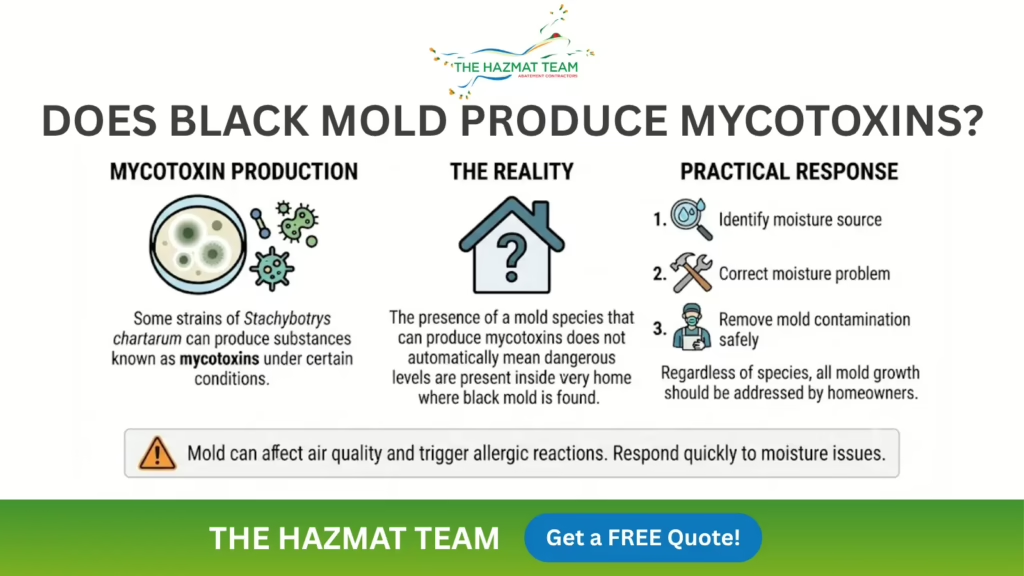
Some strains of Stachybotrys chartarum are capable of producing substances known as mycotoxins under certain conditions.
However, the presence of a mold species that can produce mycotoxins does not automatically mean dangerous levels are present inside every home where black mold is found.
Current guidance from major public health agencies does not support many of the extreme claims commonly circulated online about black mold.
That does not mean mold should be ignored.
Regardless of the species, mold growth can:
- Affect indoor air quality.
- Trigger allergic reactions.
- Irritate the respiratory system.
- Damage building materials.
- Indicate an ongoing moisture problem that requires attention.
For homeowners, the practical response remains the same:
- Identify the moisture source.
- Correct the moisture problem.
- Remove the mold contamination safely.
Protect your property. Call 714-475-0925 today!
Should You Be Concerned About Black Mold?
Yes—but it’s important to focus on the right concern.
Many homeowners immediately become worried about the mold itself, when the more significant issue is often the water damage hidden behind it.
Visible mold usually means moisture has been present long enough for mold to begin growing.
That moisture may be coming from:
- A leaking pipe
- Roof damage
- Window leaks
- Poor ventilation
- HVAC condensation
- Foundation seepage
- Flooding
- Appliance failures
Ignoring these moisture problems allows damage to continue even if the visible mold is temporarily cleaned away.
Instead of asking:
“Is the black mold dangerous?”
A better question is:
“Why is mold growing here in the first place?”
Answering that question usually leads to a permanent solution.
Why You Should Never Ignore Visible Mold
Whether mold appears black, green, white, gray, or another color, visible mold growth should never be ignored.
Allowing mold to remain on building materials may result in:
- Continued moisture damage
- Deterioration of drywall
- Damage to wood framing
- Staining of interior finishes
- Reduced indoor air quality
- More expensive repairs over time
Small moisture problems often become larger structural repairs when left unaddressed.
Taking action early is almost always less expensive than waiting until mold has spread into additional building materials.
What Causes Black Mold to Grow?
Black mold requires moisture.
Without moisture, it cannot continue growing.
Some of the most common causes include:
Plumbing Leaks
Slow leaks behind walls, beneath sinks, or around plumbing fixtures often provide enough moisture for mold to develop over time.
Roof Leaks
Damaged roofing materials or flashing can allow rainwater to enter attics and wall cavities where mold develops unnoticed.
Flooding
Flood damage that is not dried promptly can create ideal conditions for mold growth on drywall, insulation, flooring, and wood framing.
Poor Ventilation
Bathrooms, laundry rooms, kitchens, and utility spaces that lack adequate ventilation often experience elevated humidity levels.
Over time, condensation can support mold growth even without an active plumbing leak.
HVAC Condensation
Air conditioning systems naturally produce condensation.
If drain lines become clogged or components malfunction, excess moisture may accumulate around the equipment.
High Indoor Humidity
Indoor humidity that consistently remains above recommended levels increases the likelihood of mold growth throughout the home.
Maintaining indoor relative humidity between 30% and 50% helps reduce this risk.
Where Is Black Mold Commonly Found?
Black mold is most often found in areas where moisture remains trapped for extended periods.
Common locations include:
- Bathrooms
- Laundry rooms
- Kitchens
- Basements
- Crawlspaces
- Attics
- Around windows
- Behind drywall
- Under carpeting
- Around plumbing penetrations
- Near water heaters
- Around HVAC equipment
Because mold often develops in concealed spaces, homeowners may first notice a musty odor before seeing visible mold growth.
If unusual odors persist after cleaning or repairs, further investigation may be warranted.
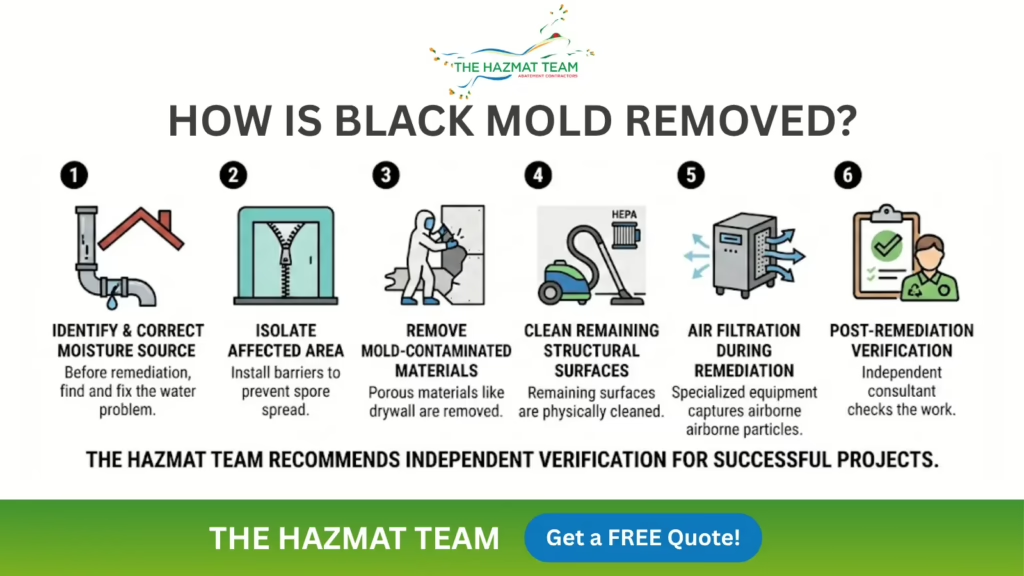
How Is Black Mold Removed?
One of the biggest misconceptions homeowners have is that mold can simply be sprayed with a cleaner and forgotten.
While surface cleaning may be appropriate for some very small, non-porous areas, larger or more significant mold problems usually require a much more comprehensive approach.
Professional mold remediation focuses on safely removing mold contamination while minimizing the spread of mold spores to unaffected areas of the property.
Although every project is different, most professional mold remediation projects follow a similar process.
Step 1: Identify and Correct the Moisture Source
Before mold remediation begins, the source of moisture should be identified and corrected.
Removing mold without fixing the water problem is similar to repairing water damage while leaving a pipe leaking behind the wall.
Until the moisture source has been addressed, mold has the potential to return.
Common moisture sources include:
- Plumbing leaks
- Roof leaks
- Window leaks
- Appliance failures
- HVAC condensation
- Foundation seepage
- Poor ventilation
- Elevated indoor humidity
When moisture-source identification or structural drying is needed, homeowners should work with qualified drying professionals or independent environmental consultants to determine where the water is entering the structure.
Step 2: Isolate the Affected Area
Once the moisture issue has been addressed, the affected area is isolated to help prevent mold spores from spreading during the remediation process.
Depending on the size and complexity of the project, this may include:
- Installing containment barriers
- Restricting access to the work area
- Protecting nearby finishes and personal belongings
- Establishing controlled entry and exit points
- Using engineering controls when appropriate
Proper containment is one of the most important aspects of professional mold remediation because it helps protect unaffected portions of the property.
Step 3: Remove Mold-Contaminated Materials
Some building materials can be cleaned successfully, while others may require removal if they have been extensively damaged by mold.
Materials commonly removed during remediation include:
- Drywall
- Insulation
- Ceiling materials
- Carpet and padding
- Baseboards
- Trim
- Other porous building materials that cannot be effectively restored
The decision to remove or restore materials depends on the extent of contamination, the condition of the material, and the goals of the project.
Professional remediation is not about removing more than necessary—it’s about removing what is needed to safely address the contamination.
Step 4: Clean Remaining Structural Surfaces
After contaminated materials have been removed, the remaining structural surfaces are carefully cleaned.
The goal is to remove mold contamination from the remaining building components while preparing the area for reconstruction, if necessary.
Professional remediation focuses on physically removing mold contamination rather than simply covering it with paint or spraying chemicals over visible growth.
Step 5: Air Filtration During Remediation
During mold remediation, specialized air filtration equipment may be used to capture airborne particles that become disturbed during the removal process.
These systems continuously filter the air within the contained work area while remediation is underway.
Air filtration helps improve the work environment and supports efforts to reduce the migration of airborne particles into clean areas of the property.
Step 6: Post-Remediation Verification
Depending on the project, homeowners, property managers, or insurance carriers may request post-remediation verification after the work has been completed.
When testing or clearance verification is performed, it is typically completed by an independent environmental consultant rather than the remediation contractor.
Maintaining independence between testing and remediation provides homeowners with an objective evaluation of the completed work.
At THE HAZMAT TEAM, we support independent post-remediation verification because it helps provide additional confidence that the project has been completed successfully.
Protect your property. Call 714-475-0925 today!
Can You Remove Black Mold Yourself?
This is one of the most common questions homeowners ask.
The answer depends on the size of the affected area and the extent of the contamination.
Very small areas of mold on hard, non-porous surfaces may sometimes be cleaned safely using appropriate methods.
However, larger mold problems—or mold that has spread into drywall, insulation, flooring, or hidden building cavities—often require professional remediation.
Attempting to remove significant mold contamination without proper containment can spread mold spores throughout the home and make the problem more difficult to address.
If you’re unsure about the extent of the contamination, it’s generally best to have the situation evaluated before beginning demolition or cleanup.
Does Bleach Kill Black Mold?
Bleach is one of the most misunderstood products when it comes to mold.
Many homeowners assume that spraying bleach on mold permanently solves the problem.
In reality, the answer depends on the type of surface involved.
On certain hard, non-porous surfaces, bleach may help remove surface staining.
However, many common building materials—including drywall, wood, insulation, ceiling tiles, and carpeting—are porous.
When mold has penetrated these materials, simply spraying bleach on the surface does not address the contamination beneath.
More importantly, bleach does not correct the moisture problem that allowed mold to grow in the first place.
If moisture remains, mold is likely to return regardless of the cleaning product that was used.
Professional remediation focuses on correcting the moisture issue and removing contaminated materials when necessary rather than relying solely on chemical treatments.
How Can You Help Prevent Black Mold?
The best way to prevent black mold is to prevent excess moisture.
Simple maintenance practices can significantly reduce the likelihood of mold growth.
Consider these tips:
- Repair plumbing leaks as soon as they are discovered.
- Address roof leaks promptly.
- Dry water damage as quickly as possible.
- Use bathroom and kitchen exhaust fans regularly.
- Maintain indoor humidity between 30% and 50%.
- Improve airflow in areas prone to moisture.
- Inspect attics, crawlspaces, and utility rooms periodically.
- Clean gutters to help direct rainwater away from the home.
- Replace damaged caulking around windows and tubs when needed.
- Schedule routine maintenance for plumbing and HVAC systems.
Taking these simple steps can help protect both your home and your indoor air quality while reducing the likelihood of future mold problems.
Why Hiring the Right Mold Remediation Contractor Matters
When mold is discovered inside a home or commercial property, choosing the right remediation contractor can make a significant difference in the outcome of the project.
Professional mold remediation is about much more than removing visible mold. A qualified contractor understands how to properly contain the affected area, remove contaminated materials when necessary, minimize the spread of mold spores, and work alongside qualified drying professionals when moisture problems are involved.
In some older properties, moisture damage and mold concerns may also reveal the presence of other hazardous materials, such as asbestos-containing materials. When asbestos is identified, proper asbestos abatement procedures are necessary to safely contain and remove the material while preventing exposure during the remediation process.
Unfortunately, not every contractor follows the same standards.
Hiring an inexperienced contractor may result in incomplete remediation, unnecessary demolition, failure to address the conditions that allowed mold to develop, or improper handling of hazardous materials.
Before hiring a remediation company, consider asking questions such as:
- Do you specialize in mold remediation and related hazardous material services?
- How will you isolate the affected area?
- What steps will you take to minimize cross-contamination?
- How do you determine which materials can be cleaned and which should be removed?
- Do you have experience handling asbestos-containing materials when necessary?
- Will you recommend independent post-remediation verification when appropriate?
- Will you clearly explain the scope of work before the project begins?
A professional contractor should welcome these questions and be willing to explain the remediation process from start to finish.
What Factors Affect the Cost of Mold Remediation?
One of the most common questions property owners ask is:
“How much does mold remediation cost?”
The answer depends on the specific conditions at your property.
Every mold remediation project is different, and providing an estimate without first evaluating the affected areas can be misleading.
Several factors influence the overall cost.
Size of the Affected Area
Larger contaminated areas typically require additional labor, containment materials, equipment, and disposal.
As the size of the project increases, so does the amount of time required to complete the work safely.
Location of the Mold
Accessibility plays an important role in determining the complexity of a project.
Mold located behind walls, inside attics, crawlspaces, or other concealed spaces often requires more labor than mold growing on easily accessible surfaces.
Type of Building Materials
Different materials require different remediation approaches.
For example, drywall, insulation, carpeting, and ceiling materials may need to be removed if they have been extensively contaminated, while some structural materials may be cleaned and preserved depending on their condition.
Extent of Water Damage
The longer building materials remain wet, the more extensive the damage may become.
Additional drying, demolition, or reconstruction may be necessary depending on the severity of the water intrusion.
Containment Requirements
Some projects require more extensive containment than others.
A small area of visible mold may require only limited isolation, while larger or more complex projects may involve significant containment measures to help protect unaffected portions of the property.
Independent Testing or Clearance Verification
Some homeowners, property managers, insurance carriers, or environmental consultants request post-remediation verification or clearance testing after remediation has been completed.
When requested, this testing is generally performed by an independent environmental consultant.
Why Homeowners Throughout Orange County Choose THE HAZMAT TEAM
Choosing a mold remediation contractor is about more than solving today’s problem.
It’s about choosing a company you trust to protect your property and help you move forward with confidence.
At THE HAZMAT TEAM, we understand that discovering mold inside your home or business can be overwhelming. Our goal is to simplify the process by providing honest recommendations, clear communication, and professional workmanship from beginning to end.
Our customers choose us because we believe in doing the job the right way.
When you work with THE HAZMAT TEAM, you can expect:
- Clear communication throughout the project.
- Respect for your home, business, and belongings.
- Professional containment and remediation procedures.
- Honest recommendations based on your specific situation.
- Coordination with qualified drying professionals and independent environmental consultants when appropriate.
- A commitment to safety, quality, and customer satisfaction.
Whether you’re responding to a plumbing leak, roof leak, appliance failure, or long-term moisture problem, our experienced team is committed to helping restore a clean, healthy indoor environment.
When Should You Call a Professional?
Not every mold problem requires extensive remediation, but there are situations where professional assistance is strongly recommended.
Consider contacting a qualified mold remediation contractor if:
- Mold covers a large area.
- Mold continues to return after cleaning.
- You suspect mold is growing behind walls or under flooring.
- The mold developed after significant water damage.
- The affected materials include drywall, insulation, or structural components.
- Occupants are experiencing ongoing allergy or respiratory symptoms that appear to worsen indoors.
- You’re preparing to buy or sell a property and have concerns about mold or water damage.
Acting early can often reduce repair costs and prevent additional damage to your property.
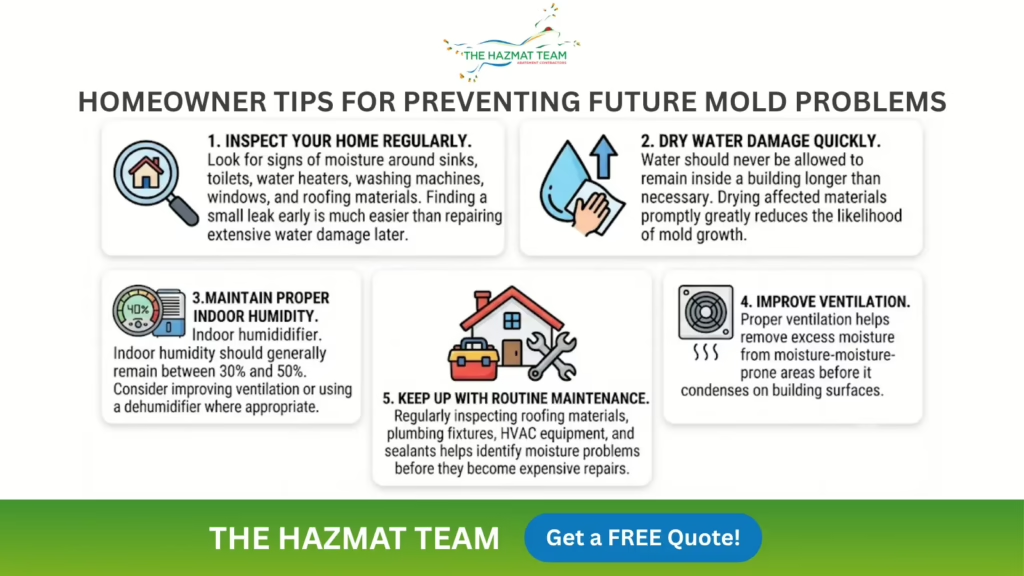
Homeowner Tips for Preventing Future Mold Problems
The best way to avoid mold problems is to control moisture before mold has an opportunity to develop.
Simple maintenance habits can make a significant difference over time.
Inspect Your Home Regularly
Look for signs of moisture around sinks, toilets, water heaters, washing machines, windows, and roofing materials.
Finding a small leak early is much easier than repairing extensive water damage later.
Dry Water Damage Quickly
Water should never be allowed to remain inside a building longer than necessary.
Whether the source is a plumbing leak, appliance failure, or storm damage, drying affected materials promptly greatly reduces the likelihood of mold growth.
Maintain Proper Indoor Humidity
Indoor humidity should generally remain between 30% and 50%.
If humidity levels remain consistently high, consider improving ventilation or using a dehumidifier where appropriate.
Improve Ventilation
Bathrooms, kitchens, laundry rooms, and other moisture-prone areas benefit from proper ventilation.
Running exhaust fans during and after activities that generate humidity helps remove excess moisture before it condenses on building surfaces.
Keep Up With Routine Maintenance
Regularly inspecting roofing materials, plumbing fixtures, HVAC equipment, and exterior sealants helps identify moisture problems before they become expensive repairs.
Preventive maintenance is one of the most effective ways to protect your property from future mold growth.
Protect your property. Call 714-475-0925 today!
Final Thoughts
Despite its reputation, black mold is often misunderstood.
While it can affect indoor air quality and trigger health symptoms in sensitive individuals, the color of the mold is only one small part of the story. The more important concern is understanding why the mold developed in the first place.
Mold is almost always a sign that excess moisture has been present long enough for spores to begin growing. Whether the source is a plumbing leak, roof leak, flooding, condensation, or elevated indoor humidity, correcting the moisture problem is essential for protecting both your property and your indoor environment.
Fortunately, most mold problems can be resolved successfully when the underlying cause is addressed and remediation is performed correctly.
If you discover visible mold in your home, don’t ignore it—but don’t panic either. Taking prompt action can often prevent more extensive damage, reduce repair costs, and help restore a healthy living environment.
Protect Your Home with Confidence
If you’ve discovered black mold or suspect hidden mold growth inside your home or business, THE HAZMAT TEAM is here to help.
We provide professional mold remediation and mold removal services for residential, commercial, and multi-family properties throughout Orange County and surrounding Southern California communities.
Our approach is built on education, transparency, and quality workmanship.
We focus on:
- Safely removing mold contamination.
- Protecting unaffected areas through proper containment.
- Helping property owners understand the conditions that caused the mold.
- Working alongside qualified drying professionals and independent environmental consultants when moisture-source identification, structural drying, or post-remediation verification is appropriate.
Whether you’re responding to recent water damage, preparing for renovations, or addressing a long-standing moisture issue, our experienced team is committed to restoring your property safely and professionally.
Contact THE HAZMAT TEAM today to schedule an inspection and receive a detailed estimate.
THE HAZMAT TEAM
The Name You Know. The Team You Trust.
Frequently Asked Questions About Black Mold
Q: Is black mold always toxic?
A: No.
One of the biggest misconceptions about black mold is that every black-colored mold is highly toxic or poses the same level of risk.
The term “black mold” is commonly used to describe Stachybotrys chartarum, but many other mold species can also appear black or very dark in color.
The color of mold does not determine how harmful it is.
Regardless of the species, visible mold inside a home indicates excess moisture that should be addressed. The safest approach is to identify the source of water, correct the moisture problem, and remove the mold contamination when appropriate.
Q: Can black mold make you sick?
A: It can.
Some individuals may experience symptoms such as:
- Sneezing
- Nasal congestion
- Coughing
- Wheezing
- Sore throat
- Itchy or watery eyes
- Skin irritation
People with allergies, asthma, chronic respiratory conditions, or weakened immune systems are often more sensitive to mold exposure than healthy adults.
If you believe mold is affecting your health, consult your healthcare provider for medical advice.
Q: Can black mold grow behind walls?
A: Yes.
In fact, mold frequently develops inside wall cavities where moisture remains trapped and hidden from view.
Common causes include:
- Plumbing leaks
- Roof leaks
- Window leaks
- HVAC condensation
- Flooding
- Poorly sealed exterior walls
Many homeowners first notice a persistent musty odor long before they ever see visible mold.
If you suspect hidden mold, avoid opening walls unnecessarily until the situation has been properly evaluated.
Q: Does black mold always come back?
A: No.
Mold returns only when moisture returns.
Professional mold remediation removes existing mold contamination, but if the plumbing leak, roof leak, condensation issue, or elevated humidity remains unresolved, new mold growth can develop.
The best long-term prevention strategy is simple:
- Eliminate the moisture source.
- Dry affected materials thoroughly.
- Repair the cause of the water intrusion.
- Maintain proper indoor humidity.
When those steps are followed, recurring mold problems are far less likely.
Q: Should I test for mold before removing it?
A: Not always.
If mold growth is clearly visible and remediation is already planned, testing may not always provide additional value.
However, independent environmental consultants may recommend testing in situations involving:
- Real estate transactions
- Hidden mold concerns
- Health-related investigations
- Insurance documentation
- Post-remediation clearance verification
If testing is appropriate for your project, we recommend working with an independent environmental consultant.
Q: Can I paint over black mold?
A: Painting over mold is generally not considered a solution.
If active mold remains beneath the paint, the underlying moisture problem still exists and the mold may continue growing.
Before repairs or repainting take place, the moisture source should be corrected and any necessary remediation should be completed.
Q: Does homeowners insurance cover mold remediation?
A: Insurance coverage varies depending on the cause of the mold and the terms of your policy.
Some policies may provide coverage when mold results from a covered water loss, while others may limit or exclude mold-related claims.
If you have questions about coverage, review your policy or speak directly with your insurance carrier.
Q: Can I stay in my home during mold remediation?
A: It depends on the size and location of the project.
Small, isolated remediation projects may allow unaffected portions of the home to remain occupied.
Larger projects involving multiple rooms, extensive containment, or significant demolition may require temporary relocation.
Your contractor should explain what to expect before work begins.
Q: What is the best way to prevent black mold?
A: The most effective way to prevent black mold is to prevent excess moisture.
Simple steps include:
- Repair plumbing leaks immediately.
- Address roof leaks promptly.
- Dry water damage as quickly as possible.
- Maintain indoor humidity between 30% and 50%.
- Improve ventilation in bathrooms, kitchens, and laundry rooms.
- Inspect your home regularly for signs of moisture.
Moisture control remains the single most effective defense against future mold growth.
Q: Can older homes have other hazardous materials besides mold?
A: Yes.
While mold is a common concern after moisture damage, older homes and buildings may also contain other hazardous materials that require professional attention.
One example is lead-based paint, which was widely used in buildings constructed before 1978. When lead-containing materials become damaged, disturbed during renovations, or begin deteriorating, they may create lead dust or debris that can pose health concerns.
Lead remediation focuses on safely identifying, containing, and addressing lead hazards to help protect occupants and prevent unnecessary exposure.
If your property has both moisture damage and older building materials, a professional evaluation can help identify potential hazards and determine the appropriate remediation approach.
Services We Offer