What If the Ceiling Tests Positive?
If asbestos is found, you have a few options.
- Leave it alone: If the ceiling is in good shape and you are not renovating, it may be left in place and monitored.
- Encapsulation: The ceiling can be sealed or covered to keep fibers from escaping.
- Removal: A trained abatement crew can remove the material using strict safety controls.
The right choice depends on the ceiling’s condition and your remodeling plans.
How Professional Removal Is Done
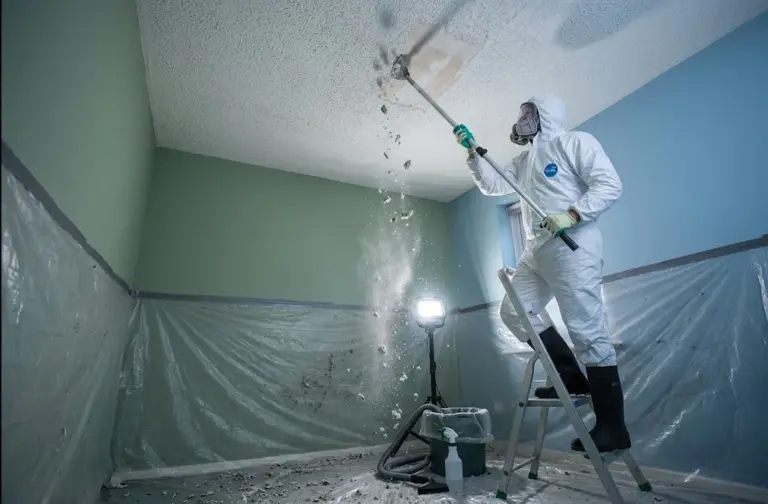
Asbestos abatement is very different from a normal remodel. A professional crew will:
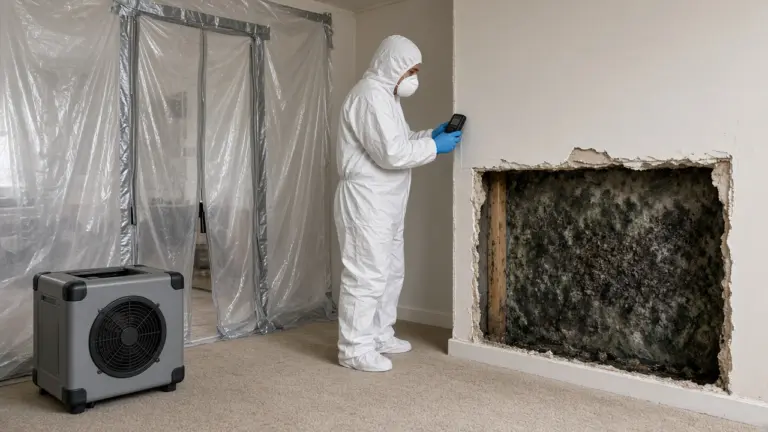
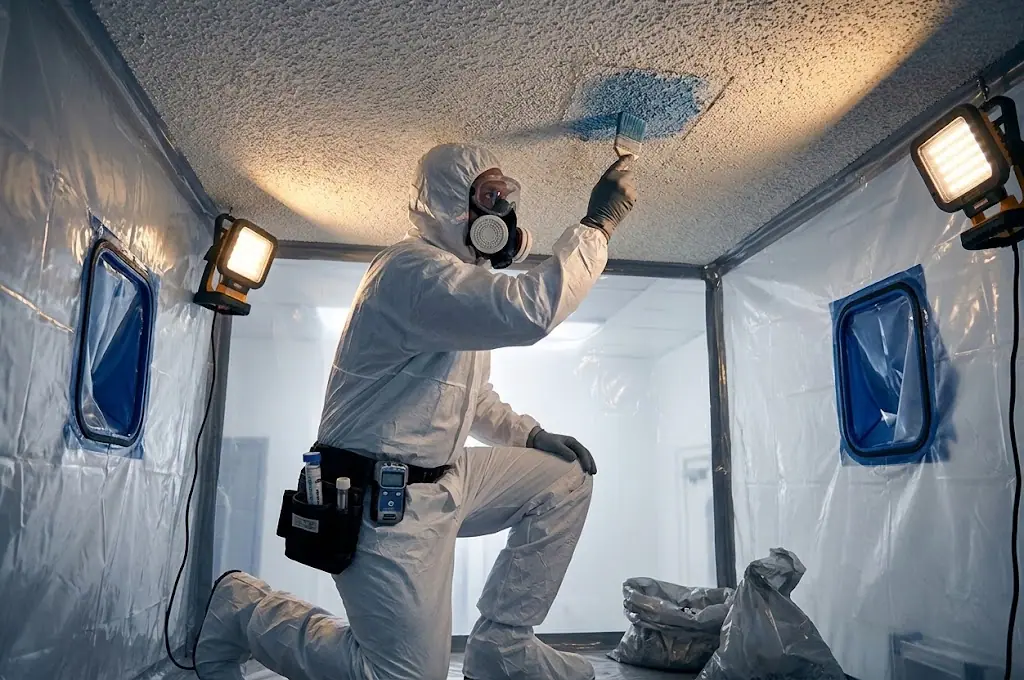
- Seal off the room with plastic sheeting to contain the work area
- Set up negative air pressure so fibers do not escape to the rest of the home
- Use HEPA filtration to clean the air
- Wet the material to limit dust
- Wear protective suits and respirators
- Bag and label waste for proper disposal
In Southern California, asbestos projects may also need to meet South Coast Air Quality Management District rules, along with Cal/OSHA and EPA standards.
Why DIY Removal Is Risky
Scraping a popcorn ceiling yourself can send fibers all through your home. The dust can settle in carpets, air ducts and furniture, where it is hard to clean up and may expose your family. Local rules may also limit how homeowners can remove and dispose of asbestos waste.
Planning a Popcorn Ceiling Project
- Find out when your home was built or last remodeled.
- Do not disturb the ceiling until it is tested.
- Use an accredited inspector and lab.
- If asbestos is present, hire a qualified abatement contractor.
- Plan time for containment, removal and clearance.
Questions to Ask a Contractor
Before you hire a crew, ask whether they are trained and licensed for asbestos work. Find out how they will seal the room, clean the air and handle the waste. Ask how long the job will take. Ask if you need to leave the home while they work. Clear answers help you feel safe, and they show that the team follows the rules.
In Short
Many older popcorn ceilings may contain asbestos. You cannot tell by looking. Test before you scrape. If asbestos is found, a trained crew should handle removal with containment and HEPA filtration.
How The Hazmat Team Can Help
The Hazmat Team provides asbestos abatement, lead removal, mold remediation and biohazard remediation for homes and businesses in Southern California. On abatement projects, the crew seals off the work area with tarps and plastic sheeting, sets up negative airflow to keep contaminants from escaping, lays drop cloths in nearby walkways and uses HEPA filtration. All waste is carefully packaged and taken to proper disposal sites. To talk through your project, call The Hazmat Team at 714-475-0925.
This article is general information only. It is not medical, legal or regulatory advice. Rules vary by location and project. Always follow EPA, Cal/OSHA and local agency requirements, and talk with a licensed professional and your doctor about specific health concerns.
Frequently Asked Questions
Q: Do all popcorn ceilings have asbestos?
A: No. But many older ones may, so testing is the only way to know.
Q: Can I paint over a popcorn ceiling with asbestos?
A: Painting or sealing is one form of encapsulation, but talk with a professional first.
Q: How long does asbestos ceiling removal take?
A: It depends on the size of the area and the project. A contractor can give you a timeline after an inspection.
Services We Offer
- Asbestos Abatement Services
- Biohazard Remediation Services
- Lead Removal Services
- Mold Remediation Services
Popcorn ceilings were a popular finish in homes for decades. The bumpy texture hid flaws and softened sound. Today, many homeowners want them gone for a cleaner look. Before you grab a scraper, ask one question: do popcorn ceilings have asbestos? In many older homes, the answer may be yes. This guide from THE HAZMAT TEAM explains the risk, why testing comes first and how removal is done safely.
Key Takeaways
- A popcorn ceiling, also called an acoustic or cottage cheese ceiling, is a spray-on texture that was common in homes built from the 1950s through the 1980s.
- Some popcorn ceiling mixes included asbestos fibers.
- The only way to know is to have a sample tested by a qualified lab.
- Scraping, sanding, drilling or water damage can release tiny fibers into the air.
- If asbestos is found, a trained crew should handle removal with containment and HEPA filtration.
What Is a Popcorn Ceiling?
A popcorn ceiling, also called an acoustic or cottage cheese ceiling, is a spray-on texture that was common in homes built from the 1950s through the 1980s. Builders liked it because it went on fast and covered flaws in drywall.
Why Popcorn Ceilings May Contain Asbestos
Asbestos is a natural mineral that was once added to many building products. It made materials stronger and more resistant to heat. Some popcorn ceiling mixes included asbestos fibers.
In the 1970s, federal rules began limiting asbestos in many spray-applied products. Even so, existing stock was used for some time after, and older ceilings were simply left in place. That means homes built or remodeled before the 1980s may still have asbestos overhead.
Why Asbestos Is a Concern
Asbestos is most dangerous when it is disturbed. Scraping, sanding, drilling or water damage can release tiny fibers into the air. These fibers can be breathed in and stay in the lungs. Long-term exposure has been linked to serious lung diseases, including mesothelioma, asbestosis and lung cancer. These illnesses can take many years to appear.
A ceiling that is intact and undisturbed generally poses less risk. The danger rises when you start a renovation.
You Cannot Tell by Looking
There is no way to know if a popcorn ceiling contains asbestos just by looking at it. The texture with asbestos looks the same as the texture without it. The only way to know is to have a sample tested by a qualified lab.
How Testing Works
- Testing usually follows these steps:
- An accredited inspector takes a small sample from the ceiling.
- The area is misted and sealed to limit fiber release.
- The sample is sent to a lab for analysis.
- The lab reports whether asbestos is present and in what amount.
- Testing before work starts helps you plan a safe project and follow the rules that apply in your area.
Protect your property. Call 714-475-0925 today!
What If the Ceiling Tests Positive?
If asbestos is found, you have a few options.
- Leave it alone: If the ceiling is in good shape and you are not renovating, it may be left in place and monitored.
- Encapsulation: The ceiling can be sealed or covered to keep fibers from escaping.
- Removal: A trained abatement crew can remove the material using strict safety controls.
The right choice depends on the ceiling’s condition and your remodeling plans.
How Professional Removal Is Done
Asbestos abatement is very different from a normal remodel. A professional crew will:
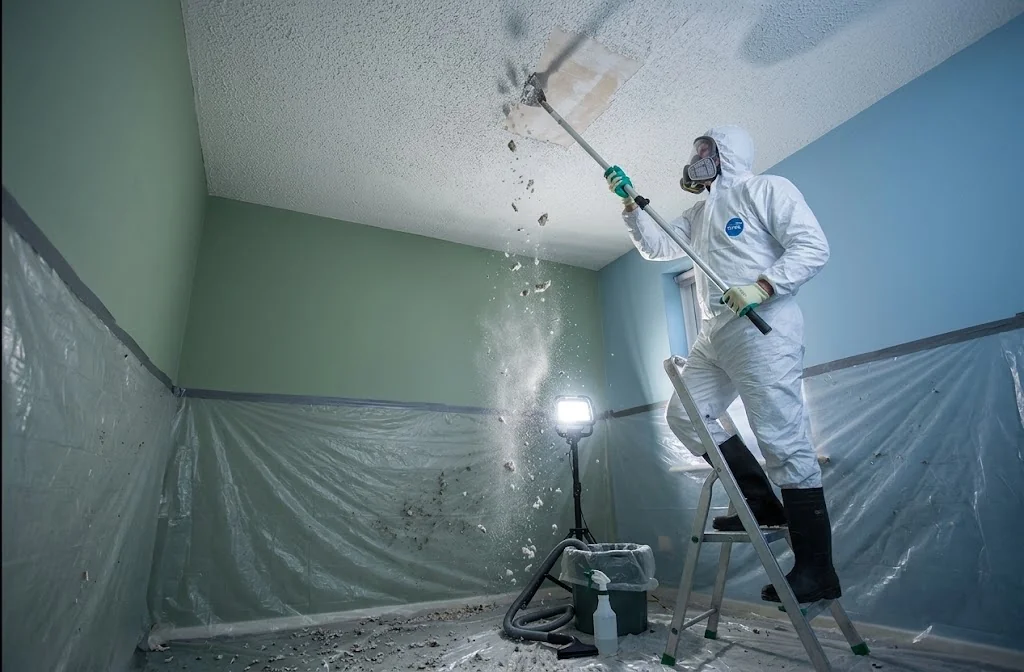
- Seal off the room with plastic sheeting to contain the work area
- Set up negative air pressure so fibers do not escape to the rest of the home
- Use HEPA filtration to clean the air
- Wet the material to limit dust
- Wear protective suits and respirators
- Bag and label waste for proper disposal
In Southern California, asbestos projects may also need to meet South Coast Air Quality Management District rules, along with Cal/OSHA and EPA standards.
Why DIY Removal Is Risky
Scraping a popcorn ceiling yourself can send fibers all through your home. The dust can settle in carpets, air ducts and furniture, where it is hard to clean up and may expose your family. Local rules may also limit how homeowners can remove and dispose of asbestos waste.
Planning a Popcorn Ceiling Project
- Find out when your home was built or last remodeled.
- Do not disturb the ceiling until it is tested.
- Use an accredited inspector and lab.
- If asbestos is present, hire a qualified abatement contractor.
- Plan time for containment, removal and clearance.
Questions to Ask a Contractor
Before you hire a crew, ask whether they are trained and licensed for asbestos work. Find out how they will seal the room, clean the air and handle the waste. Ask how long the job will take. Ask if you need to leave the home while they work. Clear answers help you feel safe, and they show that the team follows the rules.
In Short
Many older popcorn ceilings may contain asbestos. You cannot tell by looking. Test before you scrape. If asbestos is found, a trained crew should handle removal with containment and HEPA filtration.
How The Hazmat Team Can Help
The Hazmat Team provides asbestos abatement, lead removal, mold remediation and biohazard remediation for homes and businesses in Southern California. On abatement projects, the crew seals off the work area with tarps and plastic sheeting, sets up negative airflow to keep contaminants from escaping, lays drop cloths in nearby walkways and uses HEPA filtration. All waste is carefully packaged and taken to proper disposal sites. To talk through your project, call The Hazmat Team at 714-475-0925.
This article is general information only. It is not medical, legal or regulatory advice. Rules vary by location and project. Always follow EPA, Cal/OSHA and local agency requirements, and talk with a licensed professional and your doctor about specific health concerns.
Frequently Asked Questions
Q: Do all popcorn ceilings have asbestos?
A: No. But many older ones may, so testing is the only way to know.
Q: Can I paint over a popcorn ceiling with asbestos?
A: Painting or sealing is one form of encapsulation, but talk with a professional first.
Q: How long does asbestos ceiling removal take?
A: It depends on the size of the area and the project. A contractor can give you a timeline after an inspection.
Services We Offer
- Asbestos Abatement Services
- Biohazard Remediation Services
- Lead Removal Services
- Mold Remediation Services
Protect your property. Call 714-475-0925 today!
Popcorn ceilings were a popular finish in homes for decades. The bumpy texture hid flaws and softened sound. Today, many homeowners want them gone for a cleaner look. Before you grab a scraper, ask one question: do popcorn ceilings have asbestos? In many older homes, the answer may be yes. This guide from THE HAZMAT TEAM explains the risk, why testing comes first and how removal is done safely.
Key Takeaways
- A popcorn ceiling, also called an acoustic or cottage cheese ceiling, is a spray-on texture that was common in homes built from the 1950s through the 1980s.
- Some popcorn ceiling mixes included asbestos fibers.
- The only way to know is to have a sample tested by a qualified lab.
- Scraping, sanding, drilling or water damage can release tiny fibers into the air.
- If asbestos is found, a trained crew should handle removal with containment and HEPA filtration.
What Is a Popcorn Ceiling?
A popcorn ceiling, also called an acoustic or cottage cheese ceiling, is a spray-on texture that was common in homes built from the 1950s through the 1980s. Builders liked it because it went on fast and covered flaws in drywall.
Why Popcorn Ceilings May Contain Asbestos
Asbestos is a natural mineral that was once added to many building products. It made materials stronger and more resistant to heat. Some popcorn ceiling mixes included asbestos fibers.
In the 1970s, federal rules began limiting asbestos in many spray-applied products. Even so, existing stock was used for some time after, and older ceilings were simply left in place. That means homes built or remodeled before the 1980s may still have asbestos overhead.
Why Asbestos Is a Concern
Asbestos is most dangerous when it is disturbed. Scraping, sanding, drilling or water damage can release tiny fibers into the air. These fibers can be breathed in and stay in the lungs. Long-term exposure has been linked to serious lung diseases, including mesothelioma, asbestosis and lung cancer. These illnesses can take many years to appear.
A ceiling that is intact and undisturbed generally poses less risk. The danger rises when you start a renovation.
You Cannot Tell by Looking
There is no way to know if a popcorn ceiling contains asbestos just by looking at it. The texture with asbestos looks the same as the texture without it. The only way to know is to have a sample tested by a qualified lab.
How Testing Works
- Testing usually follows these steps:
- An accredited inspector takes a small sample from the ceiling.
- The area is misted and sealed to limit fiber release.
- The sample is sent to a lab for analysis.
- The lab reports whether asbestos is present and in what amount.
- Testing before work starts helps you plan a safe project and follow the rules that apply in your area.
Protect your property. Call 714-475-0925 today!
What If the Ceiling Tests Positive?
If asbestos is found, you have a few options.
- Leave it alone: If the ceiling is in good shape and you are not renovating, it may be left in place and monitored.
- Encapsulation: The ceiling can be sealed or covered to keep fibers from escaping.
- Removal: A trained abatement crew can remove the material using strict safety controls.
The right choice depends on the ceiling’s condition and your remodeling plans.
How Professional Removal Is Done
Asbestos abatement is very different from a normal remodel. A professional crew will:
- Seal off the room with plastic sheeting to contain the work area
- Set up negative air pressure so fibers do not escape to the rest of the home
- Use HEPA filtration to clean the air
- Wet the material to limit dust
- Wear protective suits and respirators
- Bag and label waste for proper disposal
In Southern California, asbestos projects may also need to meet South Coast Air Quality Management District rules, along with Cal/OSHA and EPA standards.
Why DIY Removal Is Risky
Scraping a popcorn ceiling yourself can send fibers all through your home. The dust can settle in carpets, air ducts and furniture, where it is hard to clean up and may expose your family. Local rules may also limit how homeowners can remove and dispose of asbestos waste.
Planning a Popcorn Ceiling Project
- Find out when your home was built or last remodeled.
- Do not disturb the ceiling until it is tested.
- Use an accredited inspector and lab.
- If asbestos is present, hire a qualified abatement contractor.
- Plan time for containment, removal and clearance.
Questions to Ask a Contractor
Before you hire a crew, ask whether they are trained and licensed for asbestos work. Find out how they will seal the room, clean the air and handle the waste. Ask how long the job will take. Ask if you need to leave the home while they work. Clear answers help you feel safe, and they show that the team follows the rules.
In Short
Many older popcorn ceilings may contain asbestos. You cannot tell by looking. Test before you scrape. If asbestos is found, a trained crew should handle removal with containment and HEPA filtration.
How The Hazmat Team Can Help
The Hazmat Team provides asbestos abatement, lead removal, mold remediation and biohazard remediation for homes and businesses in Southern California. On abatement projects, the crew seals off the work area with tarps and plastic sheeting, sets up negative airflow to keep contaminants from escaping, lays drop cloths in nearby walkways and uses HEPA filtration. All waste is carefully packaged and taken to proper disposal sites. To talk through your project, call The Hazmat Team at 714-475-0925.
This article is general information only. It is not medical, legal or regulatory advice. Rules vary by location and project. Always follow EPA, Cal/OSHA and local agency requirements, and talk with a licensed professional and your doctor about specific health concerns.
Frequently Asked Questions
Q: Do all popcorn ceilings have asbestos?
A: No. But many older ones may, so testing is the only way to know.
Q: Can I paint over a popcorn ceiling with asbestos?
A: Painting or sealing is one form of encapsulation, but talk with a professional first.
Q: How long does asbestos ceiling removal take?
A: It depends on the size of the area and the project. A contractor can give you a timeline after an inspection.