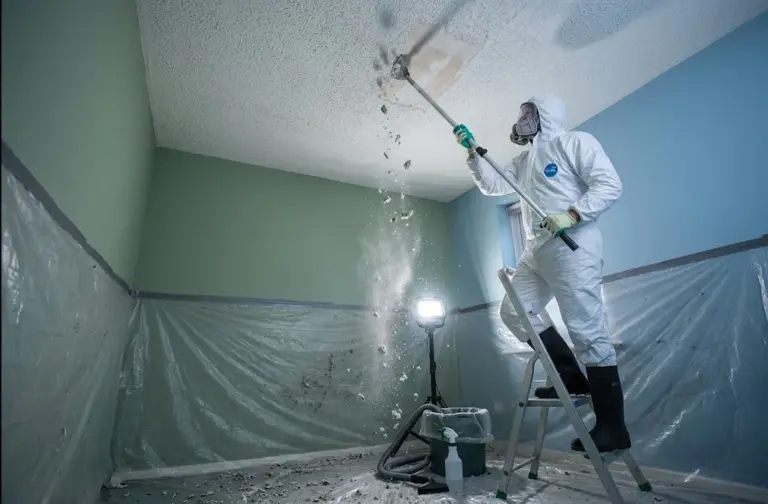
The EPA notes that absorbent materials such as ceiling tiles and carpet may need to be thrown away if they become moldy. Each piece that comes out has to be bagged, removed and later rebuilt. That’s part of why porous damage adds up. The EPA’s brief guide to mold and moisture is a good, plain-language read.
Why Is Containment Part of the Cost?
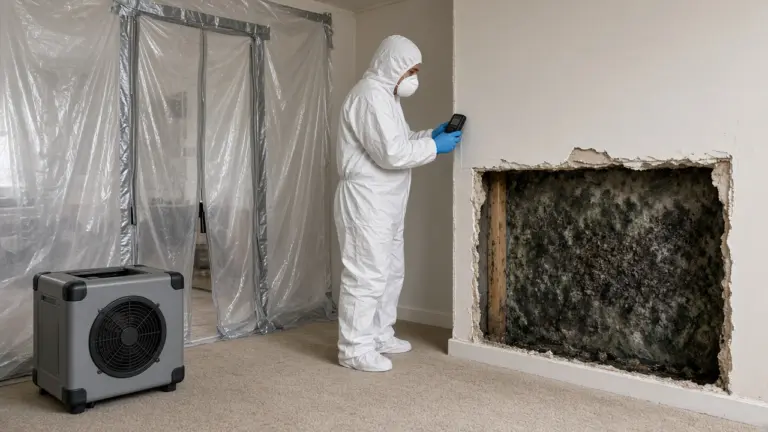
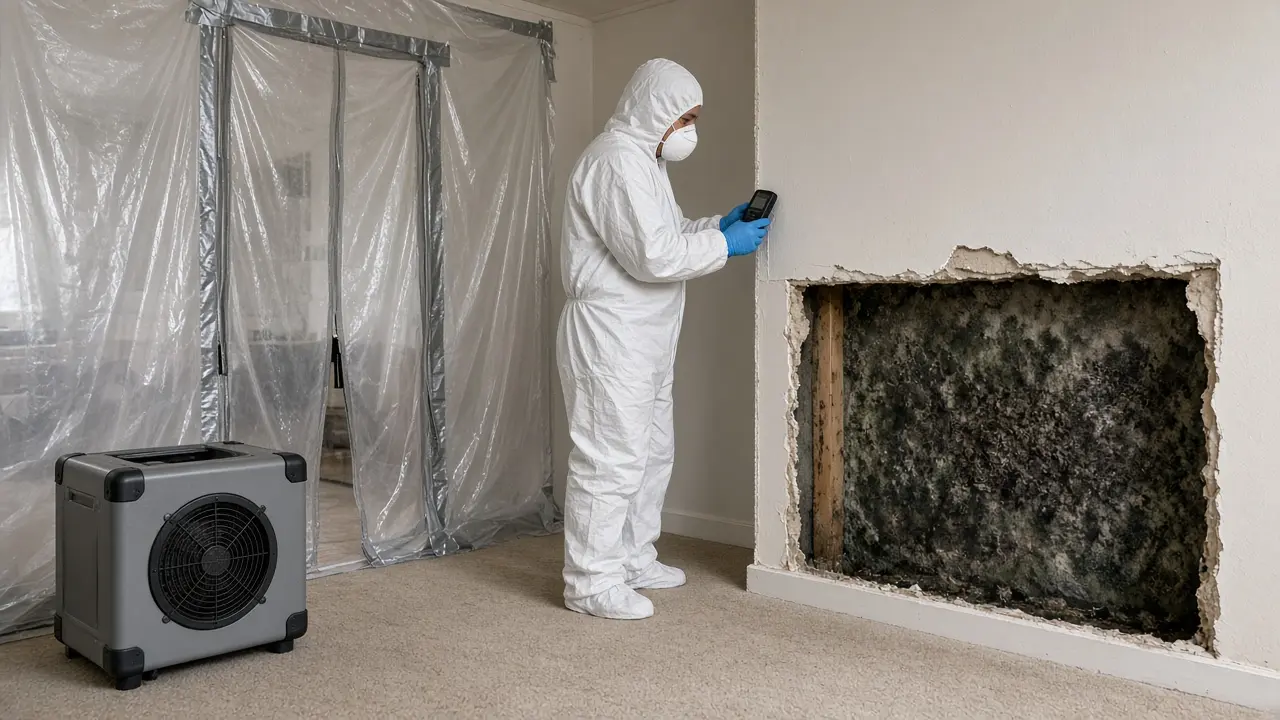
Disturbing mold can release spores into the air. Containment keeps them inside the work area. A typical setup may include plastic sheeting, sealed doorways, negative air pressure and HEPA air filtration.
The bigger or more open the space, the more containment it takes. A closet is quicker to seal than a living room with an open kitchen. If the work area includes an air return, that adds steps too, since you don’t want the HVAC system pulling spores through the house.
Wondering about daily life during the job? Read can you stay home during mold remediation.
How Does Water Damage Fit In?
Most mold starts with water. A slow leak under a sink, a roof drip or a burst pipe can all feed growth. The EPA advises drying water-damaged areas and items within 24 to 48 hours to help prevent mold.
If mold has already started, the leak still has to be repaired. Otherwise, you’re paying to remove growth that will return. Our guide to water damage mold remediation walks through the full process.
Does Testing Add to Mold Remediation Cost?
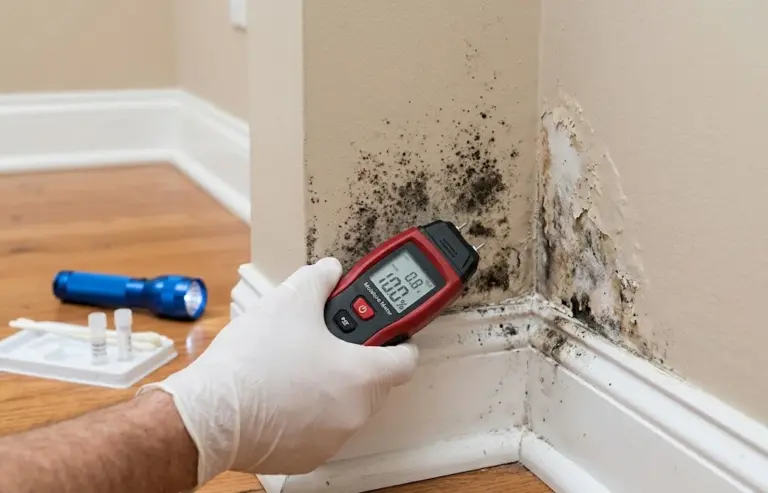
Testing and moisture checks can be part of the job. They help define the scope before work and confirm results after. A post-remediation check gives you peace of mind that the area is clean and dry before it’s rebuilt.
Ask whether verification is included in your quote and who performs it.
How Long Does Mold Remediation Take?
Time affects mold remediation cost. A small, contained area may wrap up quickly. Larger jobs with removed drywall, drying time and containment take longer. Our article on how long mold remediation takes breaks down the typical stages.
What Should a Mold Quote Include?
A clear quote should list:
- The measured area being treated
- Which materials will be removed and which will be cleaned
- How the area will be contained and filtered
- How debris will be removed and disposed of
- Whether the moisture source is part of the plan
- How the results will be checked
If anything is unclear, ask. A good team will explain each line.
How Can You Keep Costs in Check?
A few habits help:
- Act fast. Small problems grow when they’re left alone.
- Fix leaks right away. Stopping the water stops the spread.
- Don’t disturb it. Scrubbing or tearing out moldy drywall yourself can spread spores to clean areas.
- Control humidity. Fans, dehumidifiers and good ventilation help keep moisture down.
Request a Mold Remediation Quote
Every property is different, so the best way to understand your mold remediation cost is to have the area evaluated. The Hazmat Team provides mold remediation for homes, businesses and multi-unit properties throughout Orange County and Southern California. Call us at 714-475-0925 or contact us online to request a quote.
*This article is general information, not health advice. If you have symptoms you think are related to mold, talk with your doctor.*
Frequently Asked Questions
Q: What is the biggest factor in mold remediation cost?
A: The size of the affected area and the materials involved matter most. Mold in drywall or insulation usually means removal, which takes more work than cleaning hard surfaces.
Q: Why does fixing the leak matter for cost?
A: If the moisture source isn’t fixed, mold can grow back. Then you’d be paying for the same work twice.
Q: Does mold in the attic or crawl space cost more?
A: Hard-to-reach areas take more time and equipment, so they often add to the scope compared with open rooms.
Q: Is containment always needed?
A: Most professional jobs use some form of containment. Larger areas usually need full sealing and HEPA filtration.
Q: Can mold come back after remediation?
A: It can if moisture returns. Fixing leaks and controlling humidity are the best ways to keep it from coming back.
Services We Offer
- Asbestos Abatement Services
- Biohazard Remediation Services
- Lead Removal Services
- Mold Remediation Services
Key Takeaways
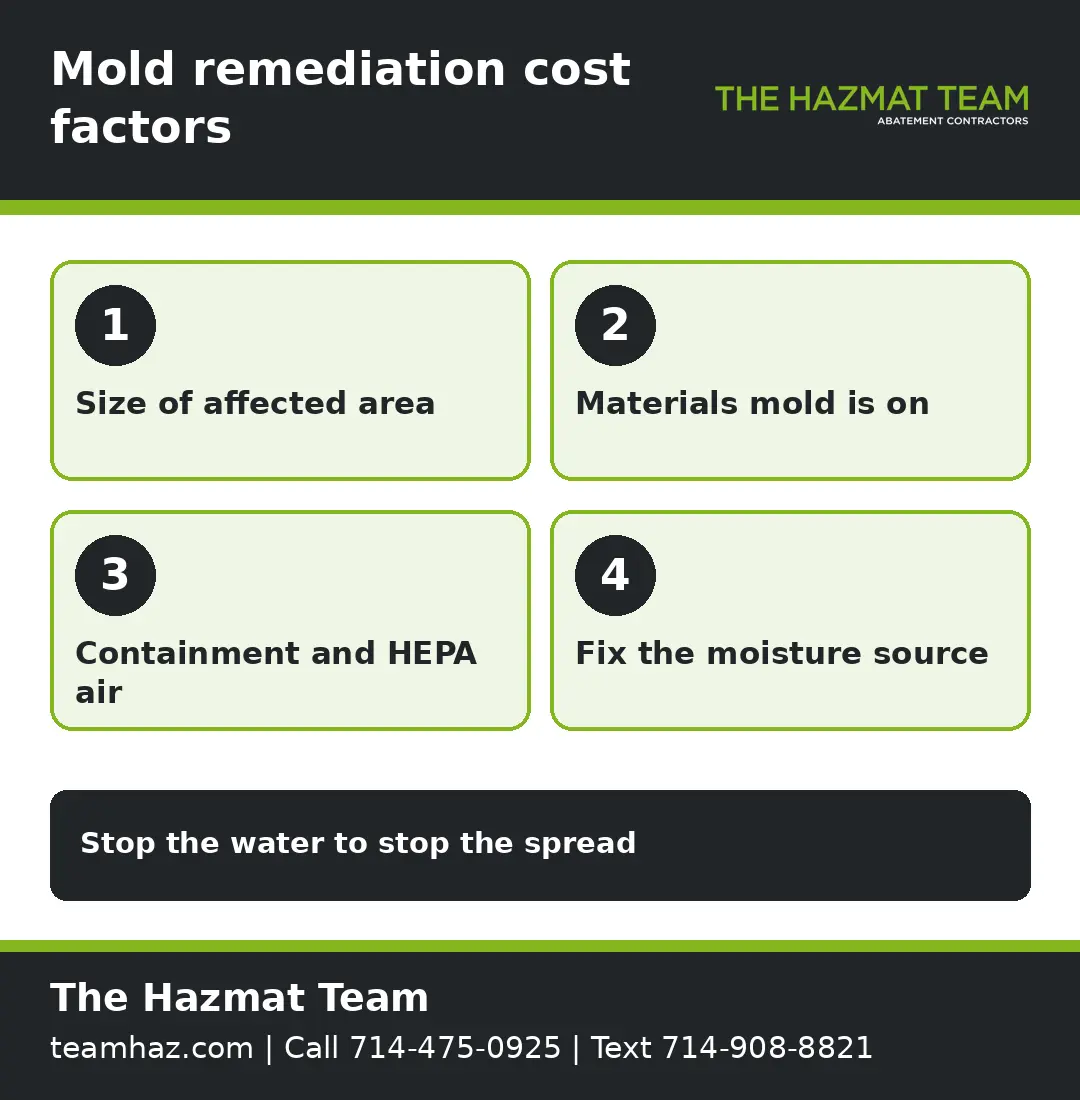
- Mold remediation cost depends on how much area is affected, where it is and what materials it’s growing on.
- Porous materials like drywall, insulation and carpet often have to come out, which adds to the scope.
- Containment and HEPA filtration keep spores from spreading during the work.
- Fixing the moisture source is a must, or the mold can come back.
- A clear, itemized quote makes it easier to compare options.
What Affects Mold Remediation Cost the Most?
The size of the affected area is usually the starting point. But size alone doesn’t tell the whole story. Two jobs of the same size can look very different once you factor in location, materials and moisture.
Here’s what we look at:
- How much area is affected. We measure what’s visible and check for hidden growth.
- Where the mold is. Open walls are easier to reach than attics, crawl spaces or wall cavities.
- What it’s growing on. Hard surfaces can often be cleaned. Porous materials usually have to be removed.
- The moisture source. A leak or high humidity has to be fixed so the problem doesn’t return.
- Containment needs. Larger jobs need more sealing and air filtration.
Why Does Hidden Mold Change the Price?
Mold often grows where you can’t see it. A small spot on the front of a wall can mean a larger patch on the back of the drywall or on the framing. That’s why a careful look before work starts matters so much.
Our post on mold inspection before remediation explains what to check. When the full extent is known up front, your quote is more accurate, and there are fewer surprises halfway through.
How Do Materials Affect Mold Remediation Cost?
Material type is a big driver. Here’s a simple way to think about it:
| Material | Usual approach | Effect on scope |
|---|---|---|
| Tile, metal, glass, sealed concrete | Clean in place | Lower effort |
| Wood framing | Clean, dry and treat if sound | Moderate effort |
| Drywall | Cut out and replace affected sections | Higher effort |
| Insulation | Remove and replace | Higher effort |
| Carpet and padding | Often removed | Higher effort |
Protect your property. Call 714-475-0925 today!
The EPA notes that absorbent materials such as ceiling tiles and carpet may need to be thrown away if they become moldy. Each piece that comes out has to be bagged, removed and later rebuilt. That’s part of why porous damage adds up. The EPA’s brief guide to mold and moisture is a good, plain-language read.
Why Is Containment Part of the Cost?
Disturbing mold can release spores into the air. Containment keeps them inside the work area. A typical setup may include plastic sheeting, sealed doorways, negative air pressure and HEPA air filtration.
The bigger or more open the space, the more containment it takes. A closet is quicker to seal than a living room with an open kitchen. If the work area includes an air return, that adds steps too, since you don’t want the HVAC system pulling spores through the house.
Wondering about daily life during the job? Read can you stay home during mold remediation.
How Does Water Damage Fit In?
Most mold starts with water. A slow leak under a sink, a roof drip or a burst pipe can all feed growth. The EPA advises drying water-damaged areas and items within 24 to 48 hours to help prevent mold.
If mold has already started, the leak still has to be repaired. Otherwise, you’re paying to remove growth that will return. Our guide to water damage mold remediation walks through the full process.
Does Testing Add to Mold Remediation Cost?
Testing and moisture checks can be part of the job. They help define the scope before work and confirm results after. A post-remediation check gives you peace of mind that the area is clean and dry before it’s rebuilt.
Ask whether verification is included in your quote and who performs it.
How Long Does Mold Remediation Take?
Time affects mold remediation cost. A small, contained area may wrap up quickly. Larger jobs with removed drywall, drying time and containment take longer. Our article on how long mold remediation takes breaks down the typical stages.
What Should a Mold Quote Include?
A clear quote should list:
- The measured area being treated
- Which materials will be removed and which will be cleaned
- How the area will be contained and filtered
- How debris will be removed and disposed of
- Whether the moisture source is part of the plan
- How the results will be checked
If anything is unclear, ask. A good team will explain each line.
How Can You Keep Costs in Check?
A few habits help:
- Act fast. Small problems grow when they’re left alone.
- Fix leaks right away. Stopping the water stops the spread.
- Don’t disturb it. Scrubbing or tearing out moldy drywall yourself can spread spores to clean areas.
- Control humidity. Fans, dehumidifiers and good ventilation help keep moisture down.
Request a Mold Remediation Quote
Every property is different, so the best way to understand your mold remediation cost is to have the area evaluated. The Hazmat Team provides mold remediation for homes, businesses and multi-unit properties throughout Orange County and Southern California. Call us at 714-475-0925 or contact us online to request a quote.
*This article is general information, not health advice. If you have symptoms you think are related to mold, talk with your doctor.*
Frequently Asked Questions
Q: What is the biggest factor in mold remediation cost?
A: The size of the affected area and the materials involved matter most. Mold in drywall or insulation usually means removal, which takes more work than cleaning hard surfaces.
Q: Why does fixing the leak matter for cost?
A: If the moisture source isn’t fixed, mold can grow back. Then you’d be paying for the same work twice.
Q: Does mold in the attic or crawl space cost more?
A: Hard-to-reach areas take more time and equipment, so they often add to the scope compared with open rooms.
Q: Is containment always needed?
A: Most professional jobs use some form of containment. Larger areas usually need full sealing and HEPA filtration.
Q: Can mold come back after remediation?
A: It can if moisture returns. Fixing leaks and controlling humidity are the best ways to keep it from coming back.
Services We Offer
- Asbestos Abatement Services
- Biohazard Remediation Services
- Lead Removal Services
- Mold Remediation Services
Found mold after a leak, or noticed a musty smell that won’t go away? Once you know there’s a problem, the next thing on your mind is probably mold remediation cost. That’s a fair question. At The Hazmat Team, we help homeowners, landlords and business owners across Florida understand what goes into a mold quote. This guide explains the factors that shape the price, so you can plan and compare quotes with confidence. We don’t list prices here, because the real number depends on what we find behind the walls.
Protect your property. Call 714-475-0925 today!
Key Takeaways
- Mold remediation cost depends on how much area is affected, where it is and what materials it’s growing on.
- Porous materials like drywall, insulation and carpet often have to come out, which adds to the scope.
- Containment and HEPA filtration keep spores from spreading during the work.
- Fixing the moisture source is a must, or the mold can come back.
- A clear, itemized quote makes it easier to compare options.
What Affects Mold Remediation Cost the Most?
The size of the affected area is usually the starting point. But size alone doesn’t tell the whole story. Two jobs of the same size can look very different once you factor in location, materials and moisture.
Here’s what we look at:
- How much area is affected. We measure what’s visible and check for hidden growth.
- Where the mold is. Open walls are easier to reach than attics, crawl spaces or wall cavities.
- What it’s growing on. Hard surfaces can often be cleaned. Porous materials usually have to be removed.
- The moisture source. A leak or high humidity has to be fixed so the problem doesn’t return.
- Containment needs. Larger jobs need more sealing and air filtration.
Why Does Hidden Mold Change the Price?
Mold often grows where you can’t see it. A small spot on the front of a wall can mean a larger patch on the back of the drywall or on the framing. That’s why a careful look before work starts matters so much.
Our post on mold inspection before remediation explains what to check. When the full extent is known up front, your quote is more accurate, and there are fewer surprises halfway through.
How Do Materials Affect Mold Remediation Cost?
Material type is a big driver. Here’s a simple way to think about it:
| Material | Usual approach | Effect on scope |
|---|---|---|
| Tile, metal, glass, sealed concrete | Clean in place | Lower effort |
| Wood framing | Clean, dry and treat if sound | Moderate effort |
| Drywall | Cut out and replace affected sections | Higher effort |
| Insulation | Remove and replace | Higher effort |
| Carpet and padding | Often removed | Higher effort |
Protect your property. Call 714-475-0925 today!
The EPA notes that absorbent materials such as ceiling tiles and carpet may need to be thrown away if they become moldy. Each piece that comes out has to be bagged, removed and later rebuilt. That’s part of why porous damage adds up. The EPA’s brief guide to mold and moisture is a good, plain-language read.
Why Is Containment Part of the Cost?
Disturbing mold can release spores into the air. Containment keeps them inside the work area. A typical setup may include plastic sheeting, sealed doorways, negative air pressure and HEPA air filtration.
The bigger or more open the space, the more containment it takes. A closet is quicker to seal than a living room with an open kitchen. If the work area includes an air return, that adds steps too, since you don’t want the HVAC system pulling spores through the house.
Wondering about daily life during the job? Read can you stay home during mold remediation.
How Does Water Damage Fit In?
Most mold starts with water. A slow leak under a sink, a roof drip or a burst pipe can all feed growth. The EPA advises drying water-damaged areas and items within 24 to 48 hours to help prevent mold.
If mold has already started, the leak still has to be repaired. Otherwise, you’re paying to remove growth that will return. Our guide to water damage mold remediation walks through the full process.
Does Testing Add to Mold Remediation Cost?
Testing and moisture checks can be part of the job. They help define the scope before work and confirm results after. A post-remediation check gives you peace of mind that the area is clean and dry before it’s rebuilt.
Ask whether verification is included in your quote and who performs it.
How Long Does Mold Remediation Take?
Time affects mold remediation cost. A small, contained area may wrap up quickly. Larger jobs with removed drywall, drying time and containment take longer. Our article on how long mold remediation takes breaks down the typical stages.
What Should a Mold Quote Include?
A clear quote should list:
- The measured area being treated
- Which materials will be removed and which will be cleaned
- How the area will be contained and filtered
- How debris will be removed and disposed of
- Whether the moisture source is part of the plan
- How the results will be checked
If anything is unclear, ask. A good team will explain each line.
How Can You Keep Costs in Check?
A few habits help:
- Act fast. Small problems grow when they’re left alone.
- Fix leaks right away. Stopping the water stops the spread.
- Don’t disturb it. Scrubbing or tearing out moldy drywall yourself can spread spores to clean areas.
- Control humidity. Fans, dehumidifiers and good ventilation help keep moisture down.
Request a Mold Remediation Quote
Every property is different, so the best way to understand your mold remediation cost is to have the area evaluated. The Hazmat Team provides mold remediation for homes, businesses and multi-unit properties throughout Orange County and Southern California. Call us at 714-475-0925 or contact us online to request a quote.
*This article is general information, not health advice. If you have symptoms you think are related to mold, talk with your doctor.*
Frequently Asked Questions
Q: What is the biggest factor in mold remediation cost?
A: The size of the affected area and the materials involved matter most. Mold in drywall or insulation usually means removal, which takes more work than cleaning hard surfaces.
Q: Why does fixing the leak matter for cost?
A: If the moisture source isn’t fixed, mold can grow back. Then you’d be paying for the same work twice.
Q: Does mold in the attic or crawl space cost more?
A: Hard-to-reach areas take more time and equipment, so they often add to the scope compared with open rooms.
Q: Is containment always needed?
A: Most professional jobs use some form of containment. Larger areas usually need full sealing and HEPA filtration.
Q: Can mold come back after remediation?
A: It can if moisture returns. Fixing leaks and controlling humidity are the best ways to keep it from coming back.