Protect your property. Call 714-475-0925 today!
When a building is damaged by fire, water, structural problems, demolition, or another event, asbestos-containing materials may become damaged or disturbed. Materials that were previously intact can be broken, cut, scraped, or exposed, creating a need for careful environmental emergency response before cleanup or reconstruction continues.
For property owners in Orange County, the priority is not simply removing damaged materials as quickly as possible. When asbestos may be involved, the appropriate response starts with understanding what materials may be affected, whether asbestos may be present, the condition of those materials, and what controls are needed before work proceeds.
At THE HAZMAT TEAM, we provide professional asbestos abatement and environmental remediation services for residential, commercial, and multi-unit properties in Fullerton, Garden Grove, Westminster, Anaheim, and surrounding Orange County communities. Our approach emphasizes safety, regulatory compliance, controlled material handling, responsible project management, and clear communication throughout the abatement process.
Key Takeaways
- Building damage can disturb asbestos-containing materials that were previously intact.
- Suspected asbestos materials should not be cut, sanded, scraped, or removed as ordinary debris before the appropriate evaluation.
- Fire, water damage, structural damage, demolition, and renovation can create different asbestos-related concerns.
- The appropriate response depends on the materials involved, their condition, planned work, and applicable requirements.
- When asbestos testing or laboratory analysis is needed, it should be performed by an independent third-party laboratory or qualified environmental professional.
- THE HAZMAT TEAM provides asbestos abatement services for residential, commercial, and multi-unit properties throughout Orange County.
What Is Environmental Emergency Response for an Asbestos Release?
Environmental emergency response for asbestos involves evaluating and controlling a situation in which asbestos-containing materials may have been damaged or disturbed.
The situation can be more complicated than ordinary property cleanup because the damage may have changed the condition of building materials. A ceiling, wall, flooring system, roofing material, insulation component, or adhesive that was previously intact may become damaged during a fire, flood, structural event, demolition, or renovation.
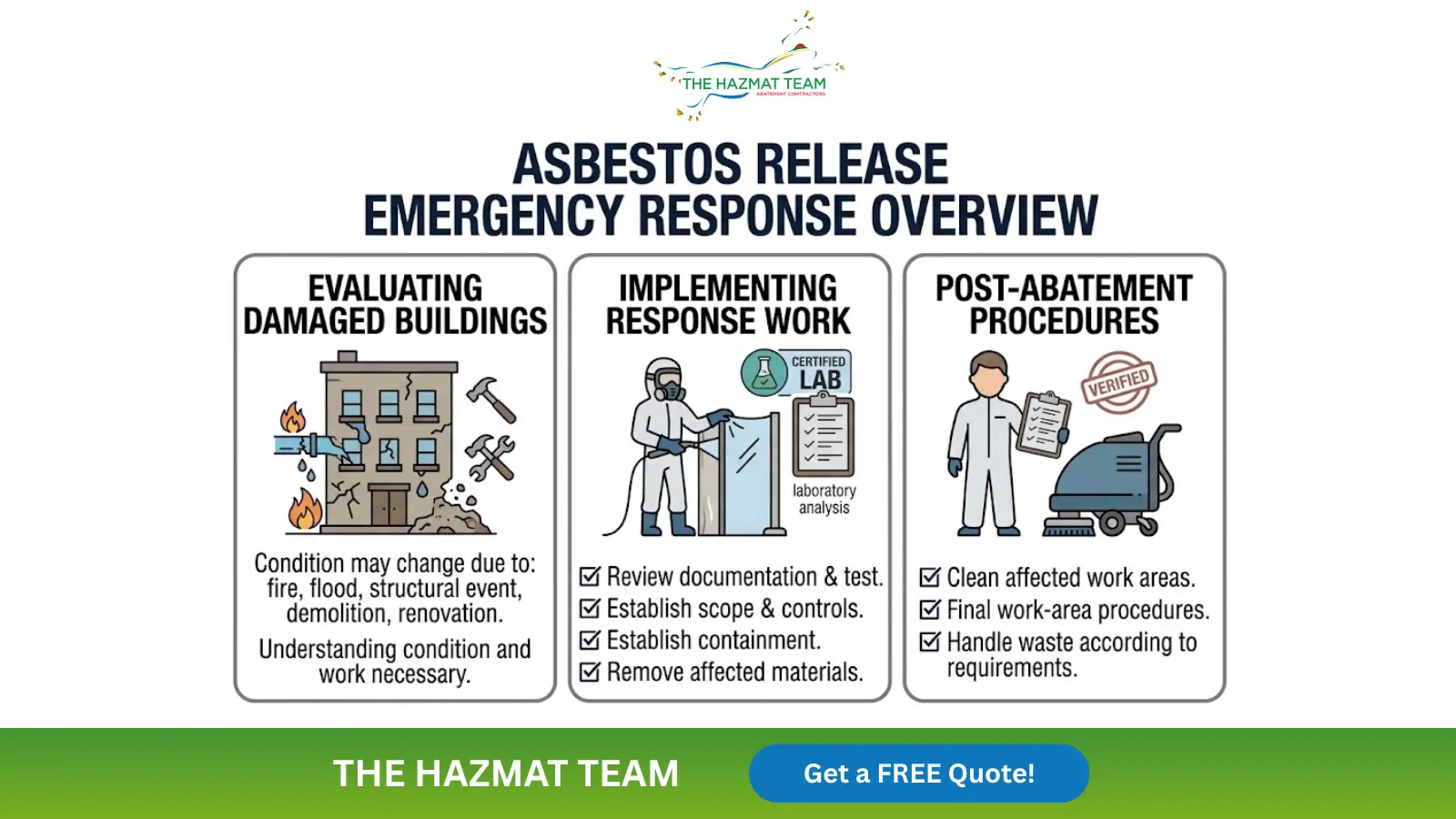
The first step is understanding the condition of the affected property and determining what work may be necessary.
Depending on the circumstances, the response may involve:
- Reviewing available property and asbestos-related documentation
- Obtaining independent asbestos testing or laboratory analysis when appropriate
- Establishing the scope of required abatement work
- Planning appropriate work-area controls
- Establishing containment when required
- Removing affected asbestos-containing materials using appropriate work practices
- Handling asbestos-related waste according to applicable requirements
- Cleaning affected work areas
- Completing applicable final work-area procedures
Not every building that contains asbestos requires immediate removal. If asbestos-containing material is intact and will not be disturbed, removal may not be necessary. When damage or planned work will disturb the material, the situation should be addressed according to the material, condition, scope of work, and requirements that apply.
Protect your property. Call 714-475-0925 today!
How Building Damage Can Create an Asbestos Concern
Asbestos is not automatically an emergency simply because it exists in an older building. The concern can change when an event damages the material or creates a need to disturb it.
Fire Damage
Fire can damage ceilings, walls, flooring, roofing materials, insulation, and other components that may contain asbestos.
Fire suppression and subsequent cleanup can create additional disturbance. Water, debris removal, demolition, and reconstruction may affect materials that were previously left undisturbed.
If damaged materials may contain asbestos, property owners and contractors should determine how those materials need to be handled before treating them as ordinary construction debris.
Water Damage
Water damage does not automatically mean that asbestos must be removed.
However, water-damage restoration may involve materials that contain asbestos, particularly in older properties. If damaged materials must be cut, removed, or demolished, determining whether asbestos is present can be an important part of planning the work.
The appropriate response depends on the materials involved, their condition, the planned repair work, and applicable requirements.
If water damage also creates mold concerns, qualified drying professionals may be needed for water mitigation and drying. THE HAZMAT TEAM specializes in mold remediation and removal rather than water mitigation or drying services.
Structural Damage
A structural failure, severe storm, earthquake, impact, or partial collapse can damage building components and create debris.
In these situations, asbestos-containing materials may become broken or mixed with other construction debris. Cleanup and demolition planning should account for the possibility of asbestos before workers disturb affected materials.
Demolition and Renovation
Renovation and demolition can disturb asbestos-containing materials even when the original building damage was limited.
For example, a contractor may need to remove flooring, drywall, textured ceiling material, roofing components, or other materials before repairs can proceed.
When asbestos may be present, property owners should obtain the appropriate information from an independent environmental consultant or qualified third-party laboratory before applicable work begins.
What Should You Do If You Suspect an Asbestos Release?
If building materials have been damaged and asbestos may be present, avoid treating the area like ordinary household or construction debris.
1. Avoid Unnecessary Disturbance
Do not cut, sand, scrape, drill, break, or remove suspected asbestos-containing materials simply to speed up cleanup.
Disturbing certain asbestos-containing materials can release fibers into the air. Limiting unnecessary disturbance while the situation is evaluated can help prevent additional disruption.
2. Address Immediate Life-Safety Hazards
If the property has structural instability, fire, electrical hazards, gas concerns, or another immediate threat to life or safety, follow the instructions of the appropriate emergency authorities.
An environmental hazard concern should not delay an immediate life-safety response.
Once the immediate danger has been addressed, asbestos and other environmental concerns can be incorporated into the cleanup and restoration plan.
3. Document the Damage
Photographs and property records can help establish the condition of the building and the scope of the damage.
Useful documentation may include:
- Photographs of damaged areas
- Insurance claim information
- Contractor estimates
- Existing asbestos reports or surveys
- Inspection documentation
- Planned demolition or repair information
Clear documentation can help property owners, contractors, insurance representatives, and environmental professionals understand what happened and determine what work may be necessary.
4. Arrange Independent Third-Party Testing When Appropriate
If the presence of asbestos is uncertain, testing may be appropriate before renovation, demolition, or other work that could disturb building materials.
Testing and laboratory analysis should be performed by an independent third-party laboratory, environmental consultant, or other appropriately qualified professional. The resulting information can then help determine what type of asbestos abatement work may be necessary.
THE HAZMAT TEAM specializes in asbestos abatement and does not need to be positioned as the testing laboratory or independent inspection provider.
5. Use Proper Asbestos Abatement Procedures
If asbestos-containing materials need to be addressed as part of the property damage, the work should be handled according to applicable requirements and appropriate safety procedures.
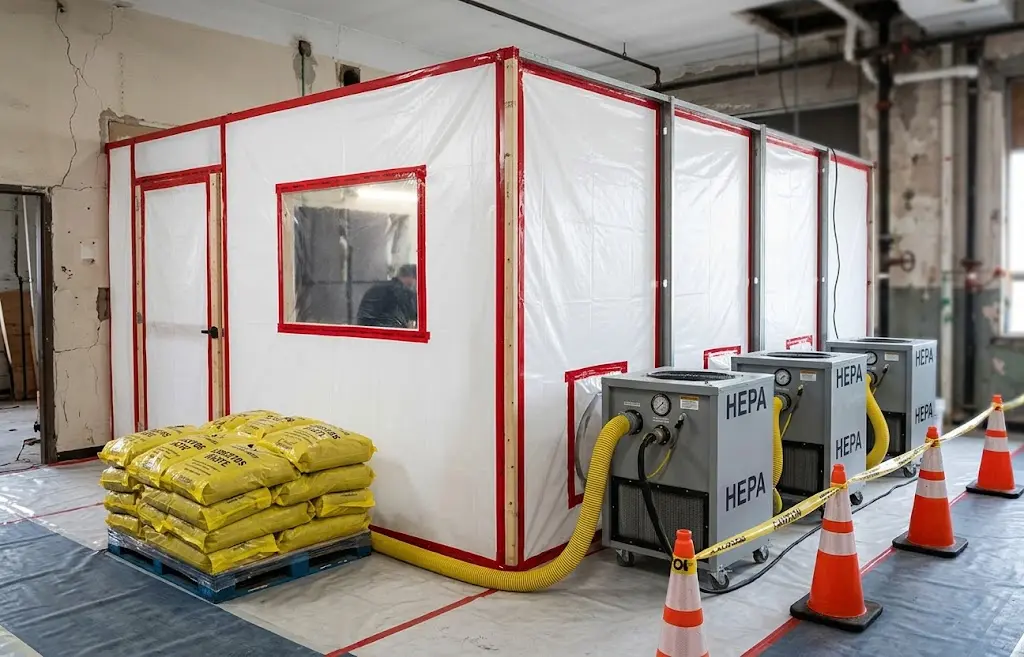
Asbestos abatement is different from ordinary household cleanup. Depending on the project, appropriate containment, work practices, protective equipment, controlled removal, cleaning, and waste handling may be necessary.
What Does Professional Asbestos Abatement Involve?
Professional asbestos abatement involves more than physically removing a damaged material.
At THE HAZMAT TEAM, our asbestos abatement approach focuses on appropriate containment, controlled removal, worker and occupant safety, responsible material handling, cleaning, and regulatory compliance throughout the project.
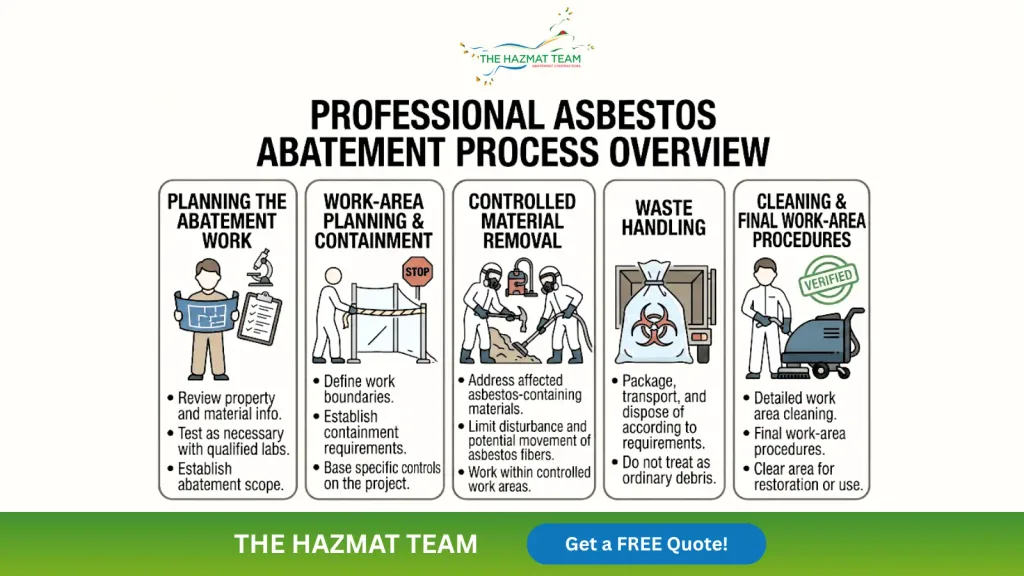
Planning the Abatement Work
Before abatement begins, the available information about the property and affected materials should be reviewed to establish the appropriate scope of work.
When testing or laboratory analysis is necessary, property owners should work with an independent environmental consultant or qualified third-party laboratory.
The resulting information can help establish which materials require abatement and what procedures may be appropriate.
Work-Area Planning and Containment
The work area should be established around the actual conditions of the project.
Depending on the scope, this can involve:
- Defining work boundaries
- Establishing controlled access
- Determining containment requirements
- Selecting appropriate work procedures
- Planning equipment and protective measures
- Establishing cleaning and waste-handling procedures
The specific controls should be based on the project rather than assuming every property requires the same approach.
Controlled Material Removal
Affected asbestos-containing materials are handled within the controlled work area using appropriate abatement procedures.
The objective is to address the material while limiting unnecessary disturbance and the potential movement of asbestos fibers beyond the designated work area.
Waste Handling
Asbestos-containing materials removed during abatement should not simply be treated as ordinary household trash or construction debris.
Asbestos-related waste must be handled, packaged, transported, and disposed of according to applicable requirements.
Cleaning and Final Work-Area Procedures
After affected materials have been addressed, the work area requires detailed cleaning according to the project requirements.
Applicable final work-area procedures should be completed before the area moves to the next stage of restoration or is returned to normal use.
Protect your property. Call 714-475-0925 today!
Why Regulatory Compliance Matters After Building Damage
Property damage does not automatically eliminate asbestos-related requirements.
For projects in the South Coast Air Basin, asbestos renovation and demolition requirements can include provisions under South Coast AQMD Rule 1403. Applicable requirements can address asbestos surveys, notifications, work practices, removal, cleanup, handling, and disposal.
Requirements can vary depending on the project and circumstances. Property owners, contractors, and other parties involved in the work should confirm current requirements with the appropriate regulatory authorities and qualified professionals.
At THE HAZMAT TEAM, regulatory compliance is part of our approach to asbestos abatement. We focus on completing abatement work according to the requirements that apply to the project while maintaining appropriate safety and work-area controls.
How Environmental Emergency Response Differs From Ordinary Cleanup
One of the most important differences is that asbestos cleanup is not simply a matter of collecting visible debris.
Ordinary property cleanup may focus on removing damaged materials, drying the property, cleaning surfaces, and preparing for reconstruction.
An asbestos-related response also has to consider whether disturbing those materials could release asbestos fibers and whether the work requires specific controls for assessment, containment, removal, cleaning, waste handling, notification, or other applicable procedures.
For example, immediately removing damaged ceiling material might appear to speed up restoration. If the material contains asbestos, disturbing it before the appropriate information and controls are established can create additional complications.
A controlled response starts with understanding the materials and the required scope of work before unnecessary disturbance occurs.
Environmental Emergency Response After a Fire or Water Loss
Property damage can be stressful enough without discovering a potential hazardous-material concern.
If asbestos may be involved after a fire or water loss, begin by documenting the damage and contacting your insurance carrier if the loss is being submitted as an insurance claim.
Ask your insurance representative whether asbestos-related assessment, abatement, or related work needs to be documented as part of the claim.
Coverage varies by policy and cause of loss. Property owners should consult their insurance carrier or adjuster about their specific claim.
Do not assume that asbestos-related work will automatically be covered or excluded.
What Should Property Owners Look for in an Asbestos Abatement Contractor?
Choosing an asbestos abatement contractor involves more than asking how quickly someone can remove damaged materials.
Property owners should consider whether the contractor is appropriately qualified for the work and whether the company clearly explains the proposed process.
Questions to consider include:
- Is the contractor properly qualified for the asbestos work required?
- Can the company explain its proposed work-area controls?
- How will affected materials be handled and removed?
- How will asbestos-related waste be managed?
- What cleaning procedures apply?
- What documentation will be provided?
- How will the company communicate what is known, what is uncertain, and what requires additional evaluation?
Clear communication matters after property damage because several parties may be involved, including property owners, property managers, restoration contractors, insurance representatives, environmental consultants, and abatement professionals.
At THE HAZMAT TEAM, our approach is built around integrity, urgency, knowledge, care, ownership, safety, and clear communication throughout the project.
Environmental Emergency Response in Fullerton, Garden Grove, Westminster, and Anaheim
For property owners in Fullerton, Garden Grove, Westminster, Anaheim, and surrounding Orange County communities, building damage can create several environmental concerns at the same time.
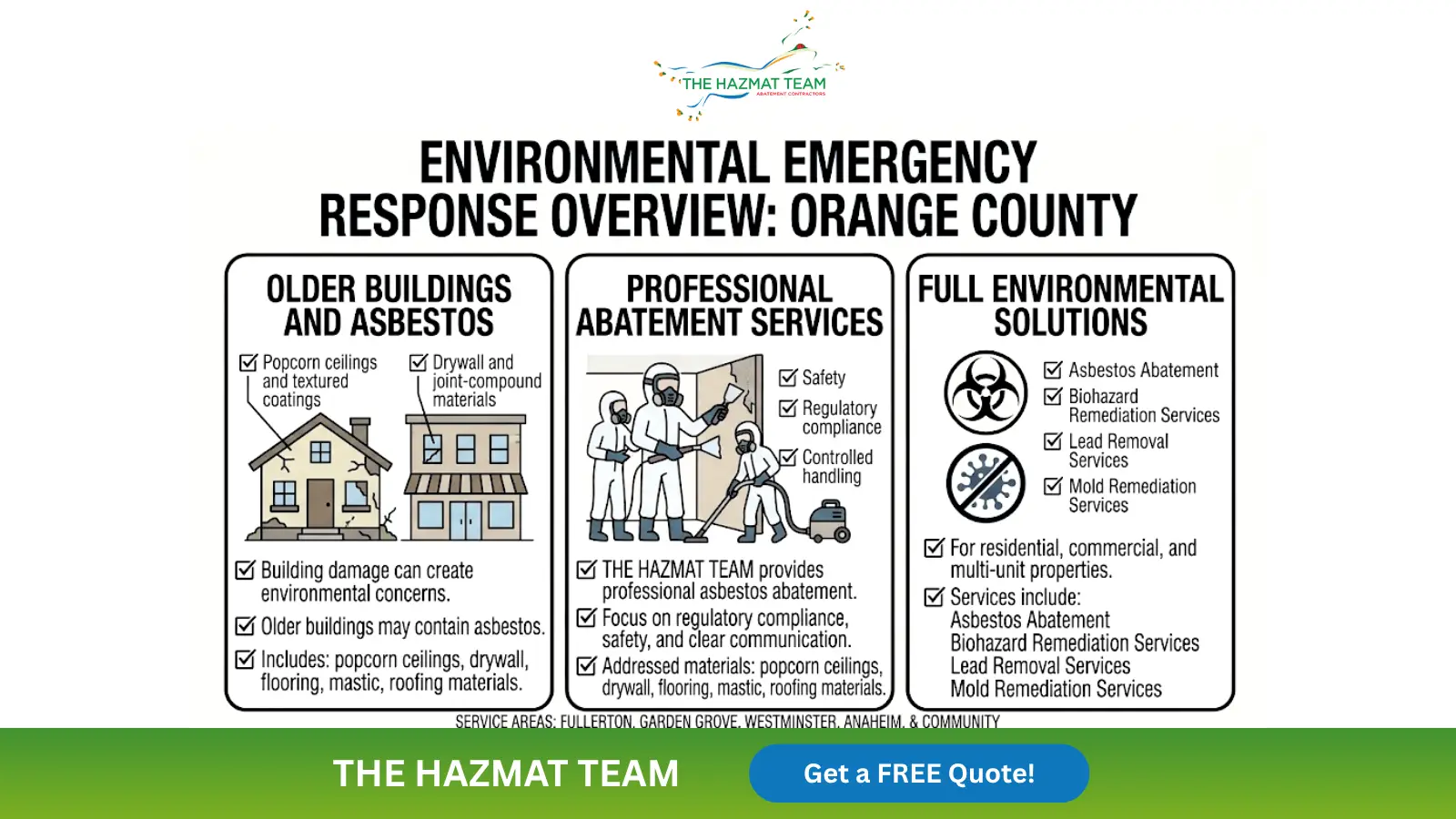
Older buildings may contain asbestos in materials such as:
- Popcorn ceilings and textured coatings
- Drywall and joint-compound materials
- Flooring and flooring adhesives or mastic
- Roofing materials
- Insulation
- Other building components
THE HAZMAT TEAM provides professional asbestos abatement services for residential, commercial, and multi-unit properties throughout Orange County.
Our services include:
- Asbestos Abatement
- Biohazard Remediation Services
- Lead Removal Services
- Mold Remediation Services
Our asbestos abatement services address materials such as popcorn ceilings, drywall, flooring, mastic, and roofing materials. We focus on appropriate abatement procedures, regulatory compliance, safety, responsible material handling, and clear communication throughout the project.
Protect your property. Call 714-475-0925 today!
When Should You Contact an Environmental Remediation Professional?
Professional guidance may be appropriate when:
- A fire has damaged older building materials.
- Water damage requires demolition or removal of building components.
- Suspected asbestos-containing materials have been broken or disturbed.
- A renovation unexpectedly encounters suspected asbestos.
- Demolition is planned on an older structure.
- Damaged building materials may contain asbestos.
- Contractors are unsure how suspected asbestos materials should be handled.
- Asbestos-containing materials may be mixed with damaged construction debris.
The appropriate response depends on the situation. Not every suspected asbestos material requires the same type of work, and not every property-damage event requires full removal.
The important step is determining what information is needed and what work is required before unnecessary disturbance occurs.
Protect Your Property With a Controlled Response
Building damage can create pressure to begin cleanup immediately. When asbestos may be involved, however, the appropriate approach is to understand the materials and conditions before disturbing them.
A proper environmental emergency response considers the source of the damage, the condition of affected materials, potential exposure concerns, planned repairs, containment needs, waste handling, and applicable requirements.
THE HAZMAT TEAM provides professional asbestos abatement and environmental remediation services for residential, commercial, and multi-unit properties in Fullerton, Garden Grove, Westminster, Anaheim, and surrounding Orange County communities.
Our services include asbestos abatement, biohazard remediation, lead removal, and mold remediation.
If your Orange County property has experienced fire, water, structural, demolition, or renovation-related damage and you are concerned about suspected asbestos, contact us at 714-475-0925 to discuss your asbestos abatement needs and the appropriate next step.
Q: What is environmental emergency response for asbestos?
A: Environmental emergency response for asbestos involves addressing a situation in which asbestos-containing materials may have been damaged or disturbed. Depending on the circumstances, the response may involve independent testing or assessment, containment, controlled abatement, cleaning, waste handling, and applicable final work-area procedures.
Q: Can fire damage release asbestos?
A: Fire can damage building materials that contain asbestos. Subsequent activities such as debris removal, demolition, or repairs may further disturb those materials. The appropriate response depends on the materials and condition of the property.
Q: Does water damage automatically require asbestos removal?
A: No. Water damage does not automatically mean that asbestos must be removed. However, water-damage restoration may involve materials that contain asbestos, particularly in older properties. If damaged materials must be cut, removed, or demolished, determining whether asbestos is present can be an important part of planning the work.
Q: Who performs asbestos testing and laboratory analysis?
A: When testing or laboratory analysis is needed, it should be performed by an independent third-party laboratory, environmental consultant, or other appropriately qualified professional. The resulting information can help property owners and contractors determine what asbestos abatement work may be necessary.
Q: Can I clean up damaged asbestos materials myself?
A: Property owners should not assume that suspected asbestos-containing materials are safe to remove themselves. Cutting, sanding, scraping, or otherwise disturbing certain materials can release asbestos fibers. Professional guidance and appropriate abatement procedures may be necessary when asbestos-containing materials could be affected by repair or demolition work.
Q: Does insurance cover asbestos abatement after property damage?
A: Coverage varies by policy and cause of loss. Property owners should consult their insurance carrier or adjuster about their specific claim rather than assuming asbestos-related work will automatically be covered or excluded.
Q: Can asbestos be left in place after building damage?
A: In some situations, asbestos-containing material may not need to be removed if it remains intact and will not be disturbed. The appropriate approach depends on the material, its condition, planned work, and applicable requirements.
Services We Offer
- Asbestos Abatement Services
- Biohazard Remediation Services
- Lead Removal Services
- Mold Remediation Services