Protect your property. Call 714-475-0925 today!
When mold is discovered behind drywall or other finishes, the problem often extends to the wood framing underneath.
Studs, joists, sill plates, sheathing, and other structural wood can become damp after plumbing leaks, roof leaks, flooding, or long-term moisture intrusion. Once those surfaces stay wet long enough, mold may begin growing on them.
Professional mold removal in Orange County involves more than wiping visible spots from the wood. The moisture source has to be corrected, damaged materials may need to be removed, framing must be evaluated and cleaned appropriately, and everything needs to dry before walls or ceilings are closed again.
At The Hazmat Team, we provide mold remediation services for residential, commercial, and multi-unit properties throughout Greater Orange County and surrounding Southern California communities. Our approach focuses on addressing contamination carefully while keeping moisture control at the center of the remediation process.
Key Takeaways
- Moldy framing should not simply be covered with new drywall or paint.
- The water or moisture source should be corrected before remediation is considered complete.
- Drywall, insulation, and other damaged materials may need to be removed to expose contaminated framing.
- Cleaning methods depend on the condition of the wood, the amount of mold growth, and the overall remediation scope.
- HEPA vacuuming may be part of final cleanup after contaminated materials are removed and surfaces are dry.
- Framing must be adequately dried before reconstruction to reduce the chance of mold returning.
Why Does Mold Grow on Wood Framing?
Mold grows on framing when moisture remains available long enough for growth to develop.
Wood itself is an organic material, and dust or other debris on its surface can also provide nutrients for mold. The main factor that allows the problem to continue, however, is moisture.
The EPA identifies moisture control as the key to controlling indoor mold. If mold is removed without correcting the water problem, it can return.
Framing commonly becomes wet because of:
- Plumbing leaks inside walls
- Roof leaks
- Window or exterior wall leaks
- Overflowing fixtures
- Appliance failures
- Water heater leaks
- HVAC condensation problems
- Flooding
- Long-term high humidity
- Water trapped behind finishes
The framing may remain wet even after the visible water is gone.
What Happens Before Professionals Clean Moldy Framing?
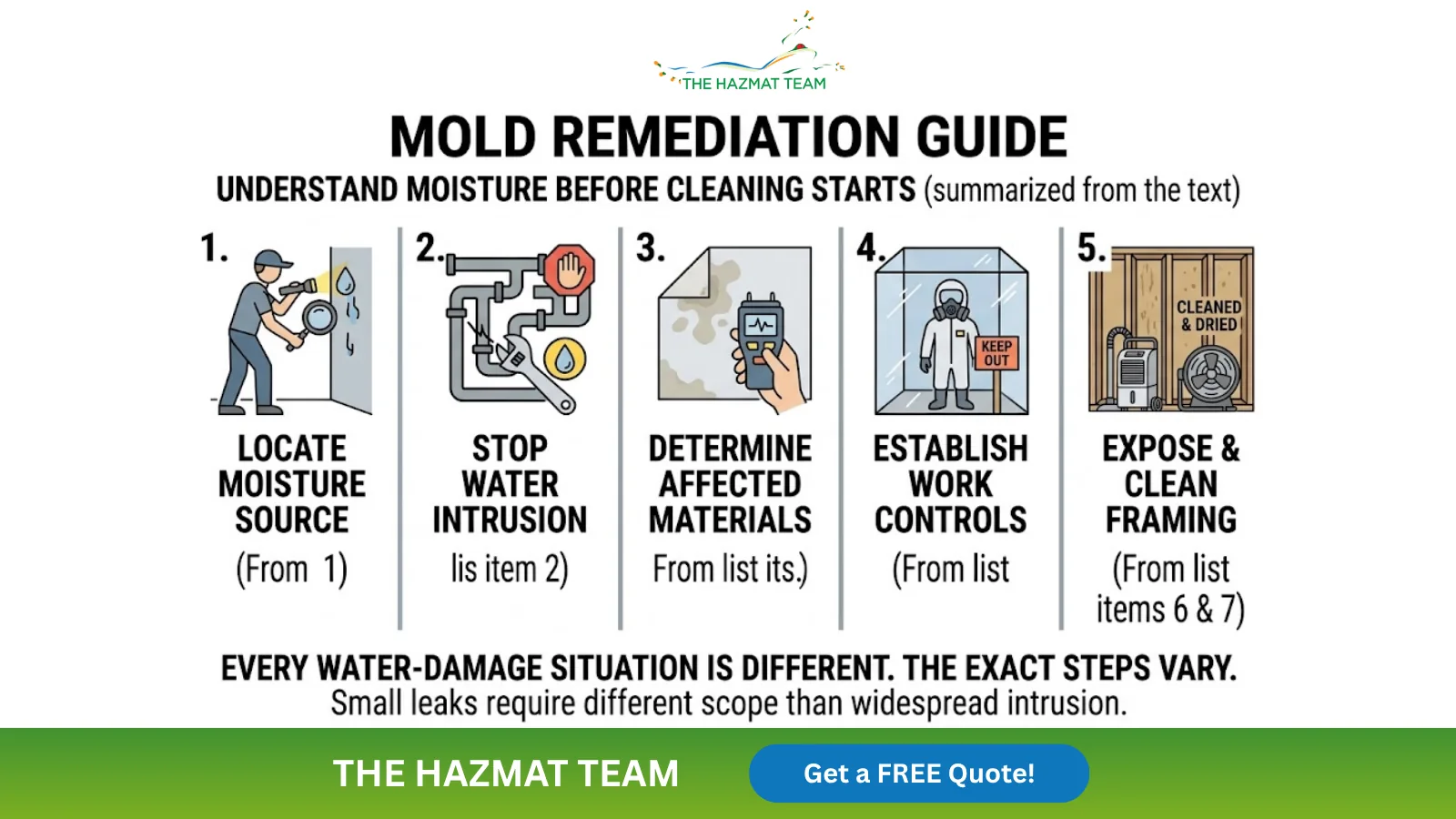
Before cleaning starts, the source and extent of the moisture problem should be understood.
A remediation project may involve:
- Locating the source of the moisture.
- Correcting or stopping the water intrusion.
- Determining which building materials are affected.
- Establishing appropriate work-area controls.
- Removing materials that cannot be properly cleaned or salvaged.
- Exposing affected framing.
- Cleaning and drying the remaining wood.
- Performing final cleanup before reconstruction.
The exact steps vary because every water-damage situation is different.
A small plumbing leak inside one wall requires a different scope than widespread water intrusion affecting several rooms.
Protect your property. Call 714-475-0925 today!
Step 1: Stop the Moisture Source
Cleaning framing before stopping the leak creates a temporary solution.
The first priority is determining why the wood became wet and preventing additional moisture from entering the area.
That could involve repairing:
- A plumbing line
- A leaking roof
- Failed flashing
- An appliance connection
- An HVAC condensate line
- Exterior water intrusion
The EPA recommends fixing leaks and water problems promptly and drying affected materials completely.
Mold remediation and moisture correction have to work together.
Step 2: Expose the Affected Framing
Framing is often hidden behind materials such as:
- Drywall
- Insulation
- Paneling
- Cabinets
- Baseboards
- Ceiling finishes
- Flooring assemblies
When these surrounding materials are mold-damaged or cannot be dried adequately, they may need to be removed so the framing can be properly inspected and cleaned.
Porous materials create an additional concern because mold can grow inside their small spaces and crevices. The EPA notes that certain porous mold-damaged materials may be difficult or impossible to clean completely and may need to be discarded.
Removing damaged finishes also helps expose areas where moisture may still be trapped.
Step 3: Evaluate Whether the Wood Can Be Salvaged
Mold growth on framing does not automatically mean the structural wood must be replaced.
Wood may sometimes be cleaned and retained if it remains structurally sound and can be adequately dried.
The condition matters.
Professionals may look for:
- Surface mold growth
- Heavy or deeply established contamination
- Rot
- Splitting
- Significant deterioration
- Persistent moisture
- Warping
- Structural damage
- Contamination from sewage or other unsafe water
Mold staining and structural deterioration are not the same issue.
Wood may remain stained after remediation even when the surface has been appropriately cleaned. On the other hand, wood that has deteriorated from prolonged moisture may require additional repair or replacement beyond mold cleaning.
Step 4: Establish Containment When Appropriate
Disturbing moldy materials can release dust and spores.
For larger or more complicated projects, remediation professionals may use containment to help separate the work area from unaffected portions of the building.
The level of containment depends on factors such as:
- Size of the contaminated area
- Amount of material being removed
- Occupancy
- Location of the mold
- Potential for contamination to spread
- Whether demolition is required
The purpose is to control what happens while contaminated materials are disturbed and removed.
Simply opening a wall and beginning demolition without considering spread can make cleanup more difficult.
Step 5: Remove Materials That Cannot Be Salvaged
Before framing can be thoroughly cleaned, damaged porous materials may have to come out.
Depending on the conditions, that can include:
- Mold-damaged drywall
- Insulation
- Ceiling tile
- Carpet padding
- Other heavily damaged porous materials
EPA guidance identifies items such as ceiling tile, cellulose insulation, fiberglass insulation, and some damaged wallboard among materials that may need removal depending on their condition and water exposure.
Professionals try to distinguish between materials that can reasonably be restored and materials that should be removed.
That helps avoid both unnecessary demolition and incomplete remediation.
Step 6: Clean Mold Growth From the Framing
Once framing is exposed, the cleaning method depends on the condition of the material and the remediation plan.
EPA guidance for wooden surfaces emphasizes removing moisture and thoroughly drying the material. Treated or finished wood surfaces may be cleaned with mild detergent and clean water and then dried.
Professional remediation methods can vary.
Depending on the project, cleaning may involve combinations of:
- Controlled surface cleaning
- Damp wiping
- Appropriate scrubbing
- HEPA vacuuming
- Other professional remediation techniques
The goal is to remove contamination while avoiding unnecessary spread to surrounding areas.
Does Mold Need to Be Sanded Off Wood Framing?
Not every moldy framing surface automatically needs sanding.
The cleaning approach should be based on the condition of the wood and how effectively contamination can be removed using less aggressive methods.
Some remediation professionals may use more intensive surface-cleaning methods when mold growth or staining cannot be addressed adequately with basic cleaning. However, aggressive disturbance can generate dust and should be handled with appropriate containment and protective measures.
Property owners should not assume that mechanically grinding or sanding visible mold is always the correct first step.
The remediation method should fit the actual condition.
Step 7: HEPA Vacuum the Work Area
HEPA vacuuming is commonly associated with mold remediation because it can help remove settled particles after contaminated material has been removed.
EPA guidance recommends HEPA vacuuming for final cleanup after materials have been thoroughly dried and contaminated materials have been taken out.
HEPA stands for high-efficiency particulate air.
During remediation, HEPA vacuuming may be used on:
- Framing
- Floors
- Work surfaces
- Nearby areas where dust has settled
It should not be viewed as a substitute for fixing the moisture source or properly cleaning contaminated surfaces.
It is one part of a larger process.
Step 8: Dry the Framing Thoroughly
Cleaning mold without drying the wood leaves one of the main conditions for regrowth in place.
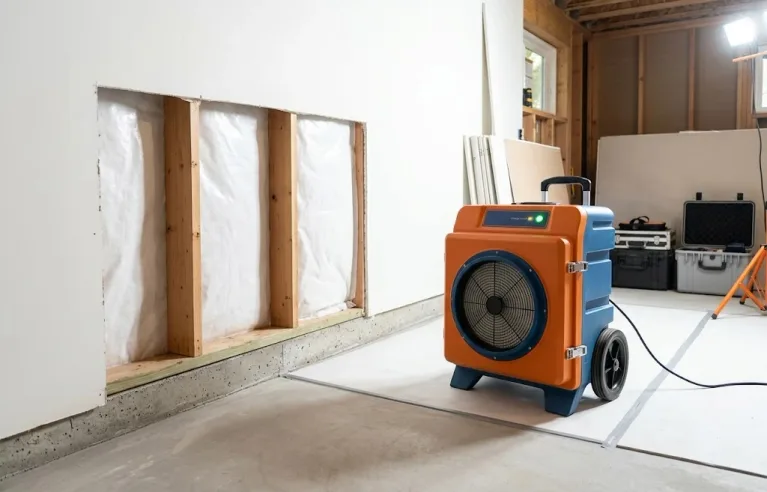
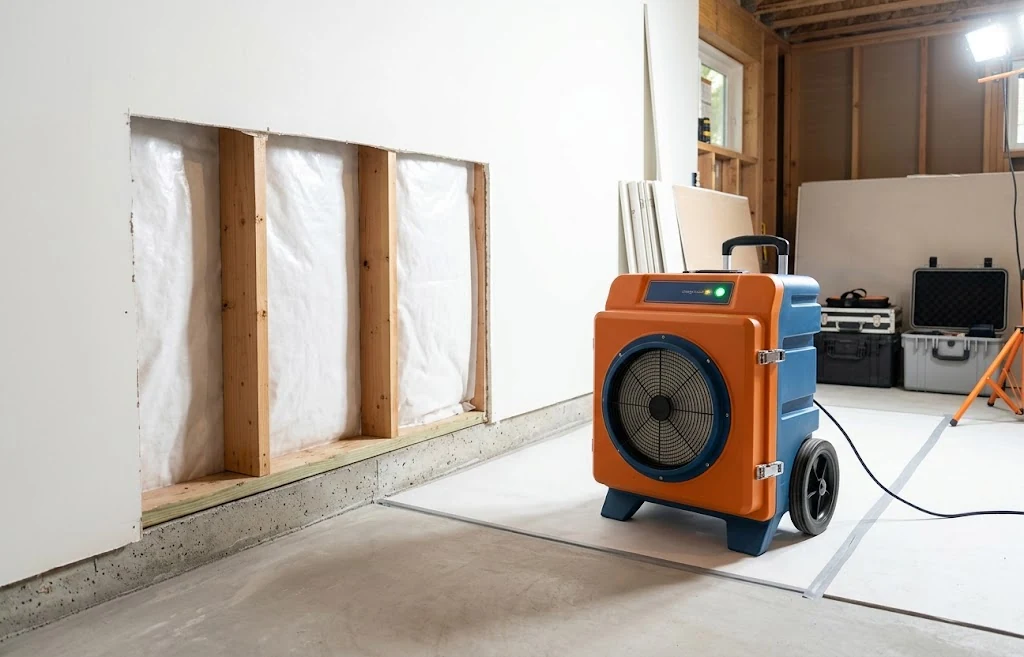
Professionals may use equipment such as:
- Dehumidifiers
- Air-moving equipment
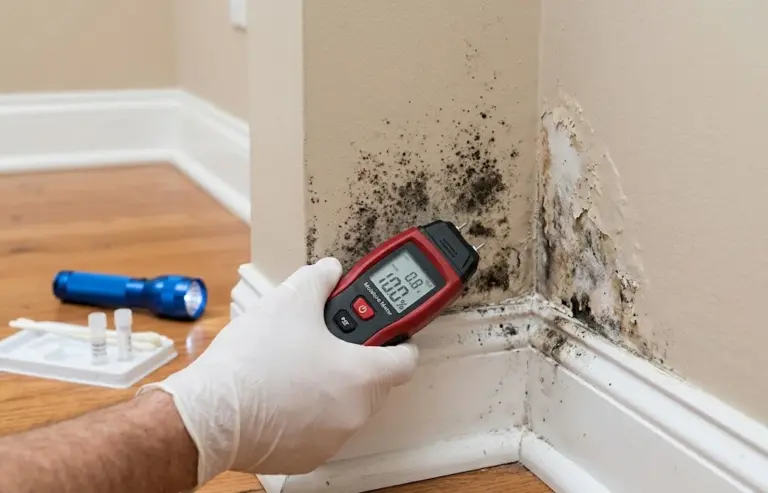
- Moisture meters
- Controlled ventilation
EPA guidance notes that moisture meters can help measure the moisture content of wood and other building materials and can be useful for monitoring the drying process.
The objective is not simply to make the surface feel dry.
Moisture can remain inside framing even when the outer surface seems dry to the touch.
Why Moisture Measurements Matter Before Closing the Wall
Reconstruction should not begin merely because mold is no longer visible.
If wet framing is immediately covered with:
- New drywall
- Insulation
- Cabinets
- Paneling
- Other finishes
moisture can become trapped again.
That can recreate conditions that support mold growth.
Moisture measurements give the remediation or restoration team more useful information than appearance alone.
The appropriate drying target can depend on the building materials, environment, and conditions in comparable dry areas of the property.
How Long Does Wood Framing Take to Dry?
There is no universal drying time.
Drying depends on variables such as:
- How wet the framing became
- Duration of water exposure
- Wood thickness
- Indoor humidity
- Temperature
- Air movement
- Wall configuration
- Whether wet insulation or drywall remains nearby
The EPA recommends addressing water-damaged materials within approximately 24 to 48 hours when possible to reduce the chance of mold growth.
That does not mean framing will always dry completely within 48 hours once remediation begins.
The actual drying process may take longer depending on conditions.
Should Bleach Be Used on Moldy Framing?
Bleach should not be treated as the universal answer to mold remediation.
CDC guidance notes that bleach can be used in some household mold-cleaning situations, while also emphasizing safe handling and warning never to mix bleach with ammonia or other cleaners.
For professional framing remediation, however, the bigger priorities are:
- Removing contamination appropriately
- Correcting the moisture source
- Drying the wood
- Preventing spread during cleanup
- Removing unsalvageable materials
Simply spraying a chemical onto moldy framing does not address a continuing leak or wet building materials.
Does Killing Mold Mean the Framing Is Clean?
No.
Mold remediation is not just about whether mold organisms are alive.
Physical contamination still needs to be removed.
EPA guidance explains that mold can generally be removed from suitable surfaces through physical cleaning methods and stresses that moisture control is essential.
That is one reason professional remediation focuses on cleaning and removal rather than relying only on sprays that claim to “kill” mold.
Visible residue, dust, damaged materials, and the underlying moisture problem still need attention.
Should Moldy Framing Be Painted or Sealed?
Moldy framing should not simply be painted over.
The EPA advises against painting or caulking moldy surfaces before they have been cleaned and dried.
A coating cannot replace proper remediation.
Before framing is covered or coated, the priorities should be:
- Eliminate the moisture source.
- Remove materials that cannot be salvaged.
- Clean affected framing.
- Dry the framing thoroughly.
- Complete final cleanup.
- Verify that conditions are suitable for reconstruction.
Only then should restoration move forward.
What If Mold Growth Is Deep in the Wood?
Heavy deterioration requires a different evaluation than light surface growth.
If framing has been subjected to long-term moisture, professionals need to distinguish mold contamination from structural decay or rot.
Wood that has lost structural integrity may require replacement or review by an appropriate construction professional.
Remediation removes mold contamination.
It does not restore structural capacity to badly deteriorated wood.
This distinction becomes especially important around:
- Floor joists
- Roof framing
- Sill plates
- Load-bearing studs
- Structural sheathing
If there is uncertainty about structural condition, the remediation team may need to coordinate with the appropriate building professional.
What Happens to Moldy Drywall Around the Framing?
Drywall often responds differently from framing.
Because gypsum board and its paper facing are porous, extensive mold growth or prolonged saturation can make restoration difficult.
EPA guidance indicates that some wallboard may be dried when it has not swollen and seams remain intact, while damaged material may need to be removed and replaced.
The decision depends on the actual material condition.
Removing compromised drywall also provides access to inspect the framing and wall cavity behind it.
What About Moldy Insulation?
Some types of wet insulation are difficult to restore.
EPA remediation guidance lists cellulose and fiberglass insulation among materials that may need to be discarded following significant water damage or mold growth.
Leaving contaminated insulation inside the wall can undermine the rest of the remediation work.
Professionals therefore evaluate the wall assembly as a system rather than cleaning only the visible stud faces.
When Does Framing Need Replacement Instead of Cleaning?
Framing may need repair or replacement when physical damage goes beyond removable surface contamination.
Possible reasons include:
- Rot
- Significant decay
- Loss of structural strength
- Severe warping
- Extensive material deterioration
- Damage caused by prolonged water exposure
Mold staining alone does not necessarily mean wood has lost structural integrity.
That determination depends on the actual condition of the framing.
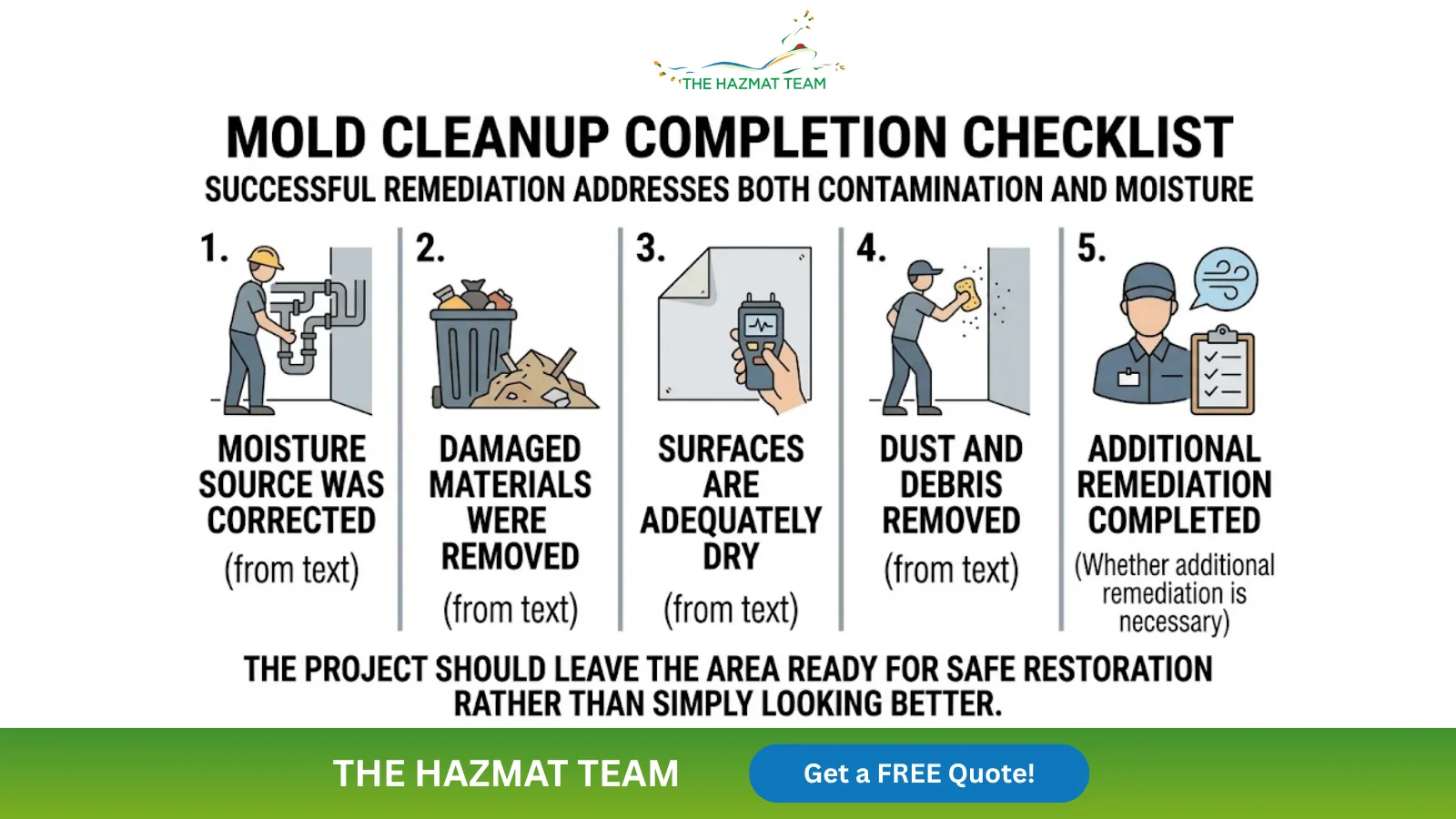
How Do Professionals Know Mold Cleanup Is Complete?
A remediation area should not simply be declared finished because the visible mold disappeared.
A successful cleanup should address both contamination and moisture.
EPA guidance indicates that the water or moisture problem should be corrected, visible mold should be removed, and moldy odors should no longer be present.
Before reconstruction, professionals may evaluate:
- Whether the moisture source was corrected
- Whether damaged materials were removed
- Whether framing is visibly clean
- Whether surfaces are adequately dry
- Whether dust and debris have been removed
- Whether moldy odors remain
- Whether additional remediation is necessary
The project should leave the area ready for safe restoration rather than simply looking better.
Protect your property. Call 714-475-0925 today!
Can Mold Return to Cleaned Framing?
Yes, if moisture returns.
Even well-cleaned framing can develop mold again if a roof begins leaking, plumbing fails, condensation continues, or humidity remains excessive.
EPA guidance emphasizes that indoor mold growth is controlled primarily by controlling moisture.
Long-term prevention therefore depends on fixing the condition that caused the growth.
Mold Removal for Westminster and Orange County Properties
Properties throughout Westminster and Orange County can experience hidden mold after leaks or water damage.
Mold may be discovered behind walls during:
- Bathroom renovations
- Kitchen renovations
- Plumbing repairs
- Flooring replacement
- Roof repairs
- Water-damage restoration
Once drywall or another finish is removed, property owners sometimes discover that the visible damage was only part of the problem.
At that point, covering the framing back up is not the right solution.
The area should be evaluated, the source of moisture corrected, and affected materials addressed before reconstruction continues.
At The Hazmat Team, we provide mold remediation services for homes, commercial properties, and multi-unit buildings throughout Greater Orange County and surrounding Southern California communities.
Address Moldy Framing Before Closing the Walls
Mold on framing should be handled before drywall, insulation, cabinets, or other finishes are installed again.
The process starts with controlling moisture. From there, contaminated materials can be removed as appropriate, salvageable framing can be cleaned, and the structure can be thoroughly dried before reconstruction begins.
Skipping those steps may leave moisture or contamination hidden inside the wall.
For professional mold removal in Orange County, contact The Hazmat Team at 714-475-0925 to discuss mold remediation for your property.
Frequently Asked Questions
Q: Can mold be removed from wood framing?
A: In many situations, mold-affected framing can be cleaned and retained if the wood remains structurally sound and can be adequately cleaned and dried. Heavily deteriorated or structurally damaged wood may require repair or replacement.
Q: Does moldy framing always need to be replaced?
A: No. Surface mold does not automatically mean the framing must be removed. The decision depends on the condition of the wood, extent of contamination, moisture damage, and whether it can be properly cleaned and dried.
Q: How do professionals clean mold from studs?
A: The exact method depends on the condition of the framing and the remediation scope. Work may include removing damaged surrounding materials, cleaning affected wood, drying the framing, and using HEPA vacuuming during final cleanup. EPA guidance supports cleaning and thorough drying of salvageable wood surfaces.
Q: Can you just spray mold on framing and cover it with drywall?
A: No. Spraying a product does not correct the moisture source or necessarily remove contamination. Mold-affected materials should be appropriately cleaned or removed, and framing should be dry before new finishes are installed.
Q: Should moldy wood framing be painted?
A: Mold should be cleaned and the wood dried before painting or applying finishes. EPA guidance advises against painting over moldy surfaces because the underlying contamination and moisture problem remain.
Q: How long should framing dry before drywall is installed?
A: There is no single drying time that applies to every project. Drying depends on moisture levels, wood thickness, humidity, airflow, and the extent of water damage. Moisture readings can help determine when framing is sufficiently dry for reconstruction.
Q: Can mold grow back after framing is cleaned?
A: Yes. Mold can return if the wood becomes wet again or remains damp. Correcting leaks, controlling humidity, and ensuring materials are dry are essential to long-term prevention.
Q: Does The Hazmat Team provide mold removal in Orange County?
A: The Hazmat Team provides professional mold remediation services throughout Greater Orange County and surrounding Southern California communities, including Westminster. We work with residential, commercial, and multi-unit properties affected by mold and water damage.
Services We Offer
- Asbestos Abatement Services
- Biohazard Remediation Services
- Lead Removal Services
- Mold Remediation Services