

Facing the Spore: When is Mold Remediation Required in Anaheim, Southern California?
Protect your property. Call 714-475-0925 today!

In the moisture conditions, salt-air corridors of Anaheim, Southern California, moisture isn’t just a weather report—it’s an ongoing structural risk in moisture-prone areas. If you’ve detected a lingering damp scent or spotted dark blooming patterns on your baseboards, you’re likely grappling with the question of when is mold remediation required before the situation compromises your home’s skeletal integrity.
The Hazmat Team specializes in dissecting these environmental hazards, moving beyond surface-level aesthetics to root out the microbial colonies thriving in the indoor moisture fluctuations in Southern California homes.
Key Takeaways
- Threshold of Concern: Professional intervention is mandatory if the colony spans more than 10 square feet or has infiltrated porous insulation.
- Olfactory Warnings: Persistent earthy or “sock-like” odors usually indicate active off-gassing from hidden colonies behind drywall.
- The 48-Hour Rule: Any secondary water intrusion from Anaheim’s seasonal storms requires immediate drying to prevent permanent fungal rooting.
- Structural Risks: Softened drywall or warped subflooring are signs that mold has already begun digesting the home’s cellulose components.
- Expert Oversight: The Hazmat Team utilizes industrial-grade HEPA filtration and antimicrobial encapsulation to ensure a sterile environment.
How Do You Determine When is Mold Remediation Required for Your Property?
Professional mold remediation becomes an absolute necessity the moment fungal growth transcends a localized surface spot and begins inhabiting the building’s substrate.
While a dash of bleach might kill a speck of mildew on a bathroom tile, true remediation is required when spores have colonized the “innards” of the home—think wall cavities, HVAC plenums, or attic rafters—where DIY cleaning agents cannot reach. The Hazmat Team evaluates the “total fungal load,” ensuring that invisible airborne concentrations are neutralized alongside visible clusters to prevent a secondary outbreak.
What Are the Undeniable Signs That You Need Professional Help?
If you are noticing a stubborn, musty odor that persists despite aggressive ventilation, or if your family is experiencing unexplained respiratory irritation that vanishes when you leave the house, the answer to when is mold remediation required is “immediately.” These are not merely inconveniences; they are biological red flags.
Environmental Indicators
- Visual Bloom: Patches of black, green, or white “fuzz” on organic materials like wood or paper.
- Substrate Saturation: Bubbling paint or peeling wallpaper often hides a thriving colony feeding on the moist drywall paper beneath.
- Efflorescence vs. Mold: Distinguishing between mineral salts on concrete and active fungal growth requires a Master Craftsman’s eye.
Structural Impact
- HVAC Contamination: If spores have entered your ductwork, every time your AC kicks on in the Anaheim’s heat, you are effectively “seeding” every room in the house with contaminants.
- Foundation Seepage: localized drainage issues, irrigation leaks, or roof/window seepage in Anaheim often lead to capillary action, drawing moisture up into floor joists.
When is Mold Remediation Required Based on the Scale of the Damage?
| Feature | DIY Surface Cleaning | Professional Remediation |
| Affected Area | Less than 10 sq. ft. (e.g., a small corner) | Greater than 10 sq. ft. or hidden in voids |
| Material Type | Non-porous (metal, glass, tile) | Porous (drywall, wood, carpet, insulation) |
| Health Risk | Low/Localized | High (Immunocompromised or chronic exposure) |
| Equipment | Standard household cleaners | HEPA Scrubbers, Negative Air Machines |
| Source Fix | Simple wipe-down | Moisture source correction & encapsulation |
Protect your property. Call 714-475-0925 today!
What is the Strategic Framework for Total Fungal Elimination?
- Forensic Moisture Mapping: We use infrared thermography and moisture meters to find the “feeding source” behind the walls.
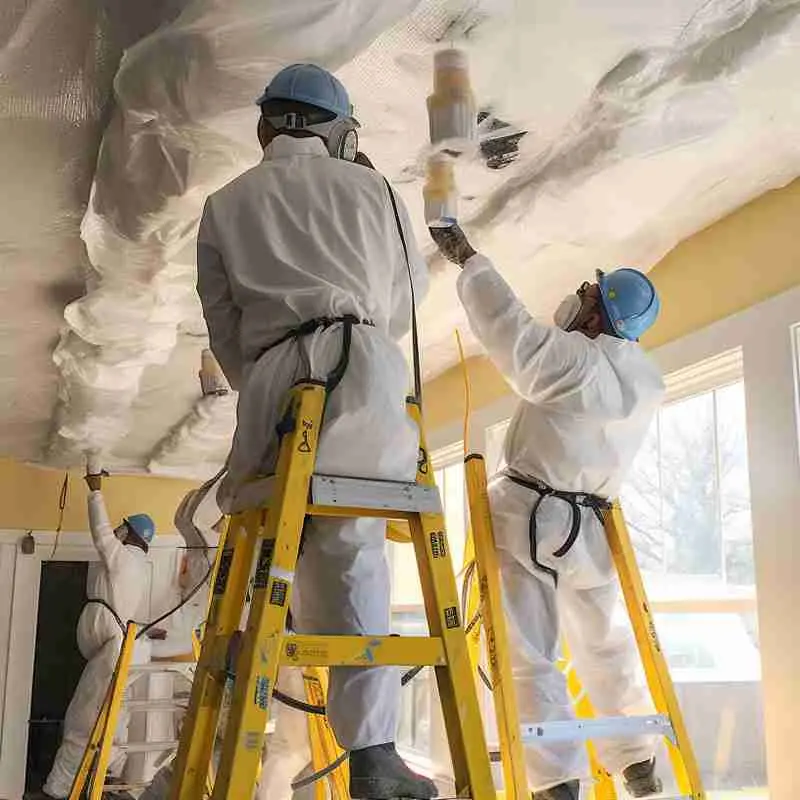
- Negative Pressure Containment: Constructing 6-mil poly-sheeting barriers to ensure spores don’t migrate to clean zones during the tear-out.
- Mechanical Removal: This isn’t just spraying; it involves physically removing contaminated materials (source removal) and HEPA-vacuuming surfaces.
- Antimicrobial Encapsulation: Applying professional-grade coatings that prevent future spores from “rooting” in the treated wood.
- Post-Remediation Verification: Ensuring the air quality index has returned to a baseline that is safe for occupancy.
Master Craftsman Insights: The Ground Truth on Anaheim‘s Mold
Expert Perspective: “In our experience across Southern California, many homeowners mistake ‘dry’ for ‘safe.’ Even if a leak stopped months ago, dormant mold spores can survive in a desiccated state for years. the moment indoor humidity hits 60%, they reactivate. Real remediation isn’t just about killing the mold; it’s about removing the biological mass entirely so it can’t serve as a food source for the next generation of spores.”
Why Does the Anaheim, Southern California‘s Climate Dictate Higher Remediation Standards?
The localized 4 p.m. Southern California winter rain events create a “pressure cooker” effect for residential structures. When high heat meets high moisture, the incubation period for Stachybotrys (black mold) or Aspergillus shrinks significantly.
This environmental reality is a primary factor in when is mold remediation required, as the margin for error is much thinner here than in drier climates. The Hazmat Team understands the local building codes and the specific challenges of slab-on-grade construction common in the Southern California homes.
Technical Entities of Interest
- Psychrometrics: The study of air-vapor mixtures used to calibrate dehumidification.
- HEPA (High-Efficiency Particulate Air): Filters capable of trapping 99.97% of particles down to 0.3 microns.
- Microbial Volatile Organic Compounds (mVOCs): The chemicals produced by mold that create that “old house” smell.
Putting Your Mold Strategy into Motion
Identifying when is mold remediation required is the first step toward reclaiming the air quality and structural safety of your Southern California’s home. Ignoring a colony doesn’t just lower your property value; it allows the fungi to continue its natural role of decomposing your home’s building materials. By implementing a professional containment and removal strategy, you stop the decay and ensure a sterile environment for your family.
Synthesizing the data, if your mold spans more than a small patch or is accompanied by health symptoms, the risk of “going it alone” far outweighs the cost of professional intervention. The Hazmat Team provides the technical precision and gritty, boots-on-the-ground expertise needed to solve your moisture crisis for good.
Contact us today or visit our website if you wish to learn more about hazmat remediation or need to schedule an inspection at 714-908-8821!
Protect your property. Call 714-475-0925 today!

Frequently Asked Questions
What exactly is the mold remediation process?
Remediation is the high-level removal and cleaning of fungal growth from an indoor environment. Unlike simple cleaning, it involves strict containment, negative air pressure to prevent cross-contamination, and the physical removal of porous materials that have been structurally compromised by fungal hyphae.
How do I know for sure if I need remediation?
You require remediation if you see visible growth over 10 square feet, experience recurring respiratory issues indoors, or find mold inside your HVAC system. If a “musty” odor remains after deep cleaning, it’s a definitive sign that hidden colonies are thriving in wall cavities or under flooring.
Can I clean small mold patches myself without a pro?
Small, surface-level growth on non-porous surfaces like bathroom tile or metal frames can often be handled with household cleaners. However, if the mold is on drywall or has returned after multiple cleanings, it indicates a deeper moisture issue that necessitates a professional inspection.
How long does the average remediation project take?
Most residential projects in Southern California take between two to five days. The timeline depends heavily on the extent of the saturation, the drying time required for structural studs, and the complexity of the containment barriers needed to protect the rest of the home.
Is it dangerous to ignore mold in my California home?
Yes. In the California climate, mold is an aggressive decomposer. Ignoring it allows spores to saturate your air and fungi to weaken the cellulose in your home’s framing. Over time, this can lead to significant structural failure and chronic indoor air quality issues.
Services We Offer